Art of the Americas
Inca Empire
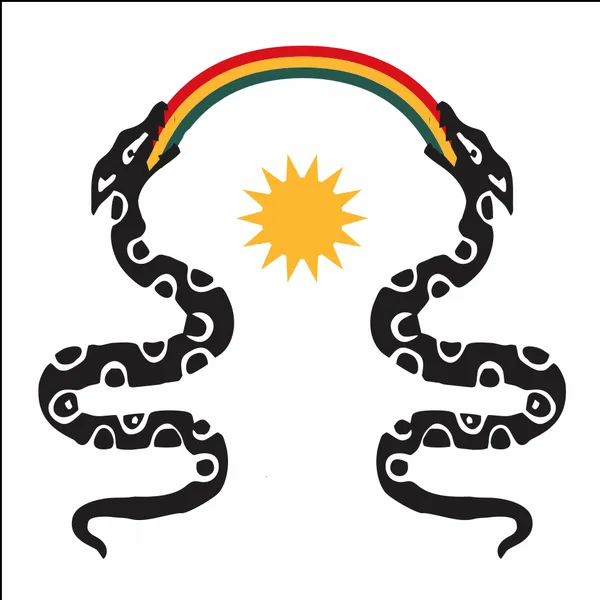
The Inca Empire, officially known as the Realm of the Four Parts (Quechua: Tawantinsuyu pronounced [taˈwantiŋ ˈsuju], lit. 'land of four parts'), was the largest empire in pre-Columbian America. The administrative, political, and military center of the empire was in the city of Cusco. The Inca civilisation rose from the Peruvian highlands sometime in the early 13th century. The Portuguese explorer Aleixo Garcia was the first European to reach the Inca Empire in 1524. Later, in 1532, the Spanish began the conquest of the Inca Empire, and by 1572 the last Inca state was fully conquered. From 1438 to 1533, the Incas incorporated a large portion of western South America, centered on the Andean Mountains, using conquest and peaceful assimilation, among other methods. At its largest, the empire joined modern-day Peru with what are now western Ecuador, western and south-central Bolivia, northwest Argentina, the southwesternmost tip of Colombia and a large portion of modern-day Chile, forming a state comparable to the historical empires of Eurasia. Its official language was Quechua. The Inca Empire was unique in that it lacked many of the features associated with civilization in the Old World. The anthropologist Gordon McEwan wrote that the Incas were able to construct "one of the greatest imperial states in human history" without the use of the wheel, draft animals, knowledge of iron or steel, or even a system of writing. Notable features of the Inca Empire included its monumental architecture, especially stonework, extensive road network (Qhapaq Ñan) reaching all corners of the empire, finely-woven textiles, use of knotted strings (quipu or khipu) for record keeping and communication, agricultural innovations and production in a difficult environment, and the organization and management fostered or imposed on its people and their labor. The Inca Empire functioned largely without money and without markets. Instead, exchange of goods and services was based on reciprocity between individuals and among individuals, groups, and Inca rulers. "Taxes" consisted of a labour obligation of a person to the Empire.
Also on this shelf
Axe-monies.
Jaguar.
See also
Uncatalogued shelfText from Wikipedia; plate via Wikimedia Commons. Text CC BY-SA 4.0; plate freely licensed (see Commons). Source record. Images and catalogue data are reproduced from open-access collections.