Art of the Americas
Pala Empire
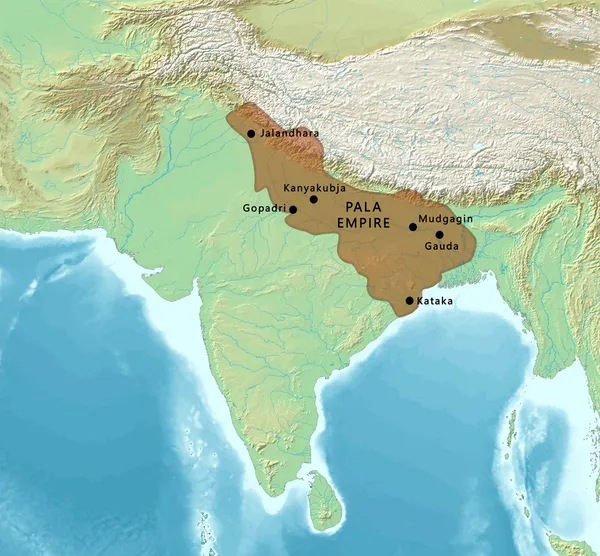
The Pāla Empire was an early medieval Indian empire ruled by the Pāla (Prakrit and Sanskrit: पाल, romanized: Pāla, lit. 'protector') dynasty. The empire was founded with the election of Gopāla by the chiefs of Gauda in the late 8th century CE. The Pala stronghold was located in Bengal and Bihar, which included the major cities of Gauḍa, Vikramapura, Pāṭaliputra, Monghyr, Somapura, Ramavati (Varendra), Tāmralipta and Jagaddala. The Pālas were astute diplomats and military conquerors. Their army was noted for its vast war elephant corps. Their navy performed both mercantile and defensive roles in the Bay of Bengal. At its zenith under emperors Dharmapala and Devapala in the early ninth century, the Pala Empire was the dominant power in northern India, with its territory stretching across the Gangetic Plain down to the Vindhya Range and may have extended to Goalpara in Assam. Dharmapala also exerted influence through the Buddhist scholar Atis Dipankar in Tibet, as well as in Southeast Asia. He was referred to as uttarapathaswami. After a brief period of decline, emperor Mahipala successfully defended his domains in Bengal and Bihar against the south Indian Chola invasions. Ramapala was the last strong Pala emperor who held control of Kamarupa and Kalinga. The empire became considerably weakened with their heavy dependence on Samantas being exposed after 11th-century Varendra rebellion, which led to the rise of resurgent Hindu Senas as sovereign power in the 12th century and expulsion of the Palas from Bengal, marking the end of the last major Buddhist imperial power in the subcontinent. The Pala period is considered one of the golden eras of Bengali history. The Palas brought stability and prosperity to Bengal after centuries of civil war between warring divisions. They advanced the achievements of previous Bengali civilisations and created outstanding works of arts and architecture. The Charyapada in Apabhraṣṭas was written by Buddhist Mahasiddhas of tantric tradition, which laid the basis of several eastern Indian languages in their rule. Palas built grand Buddhist temples and monasteries (Viharas), including the Somapura Mahavihara and Odantapuri, and patronised the great universities of Nalanda and Vikramashila. The Pala empire maintained relations with the Srivijaya Empire, the Tibetan Empire and the Arab Abbasid Caliphate.
Also on this shelf
Entheogen.
Algarve.
See also
Uncatalogued shelfText from Wikipedia; plate via Wikimedia Commons. Text CC BY-SA 4.0; plate freely licensed (see Commons). Source record. Images and catalogue data are reproduced from open-access collections.