Art of the Americas
Deity
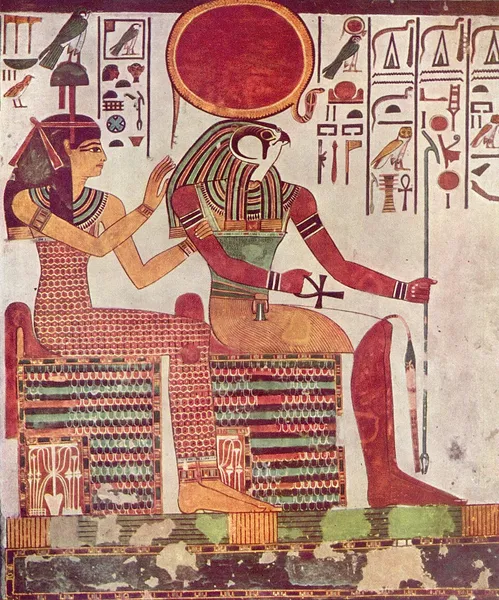
A deity is a supernatural being considered to have authority over some aspect of the universe and/or life, with many also being considered as sacred and worthy of worship. It is "a spirit or being believed to have created, or to control some part of the universe or life, for which such a deity is often worshipped". The Oxford Dictionary of English explains deity as being anything revered as divine; while C. Scott Littleton defines a deity as "a being with powers greater than those of ordinary humans, but who interacts with humans, positively or negatively, in ways that carry humans to new levels of consciousness, beyond the grounded preoccupations of ordinary life". A male deity is called a god, while a female deity is called a goddess. Belief in the existence of at least one deity, who may interact with the world, is called theism. Theistic beliefs can be categorized by how many deities they worship. Monotheism accept only one deity, whereas polytheistic religions accept multiple deities. Henotheistic religions accept one supreme deity without denying other deities, considering them as aspects of the same divine principle. Nontheistic religions deny any supreme eternal creator deity, but may accept a pantheon of deities which live, die and may be reborn like any other being. Although most monotheistic religions traditionally envision their god as omnipotent, omnipresent, omniscient, omnibenevolent, and eternal, none of these qualities are essential to the definition of a "deity" and various cultures have conceptualized their deities differently. However, some philosophical forms of monotheism or henotheism go a step further and precisely identify God with Being itself as a metaphysical grounds for the above attributes. Monotheistic religions typically refer to their god in masculine terms, while other religions refer to their deities in a variety of ways—male, female, hermaphroditic, or genderless. Many cultures—including the ancient Mesopotamians, Egyptians, Greeks, Romans, and Germanic peoples—have personified natural phenomena, variously as either deliberate causes or effects. Some Avestan and Vedic deities were viewed as ethical concepts.
Also on this shelf
Axe-monies.
History of architecture.
See also
Uncatalogued shelfText from Wikipedia; plate via Wikimedia Commons. Text CC BY-SA 4.0; plate freely licensed (see Commons). Source record. Images and catalogue data are reproduced from open-access collections.