Art of the Americas
Kennewick Man
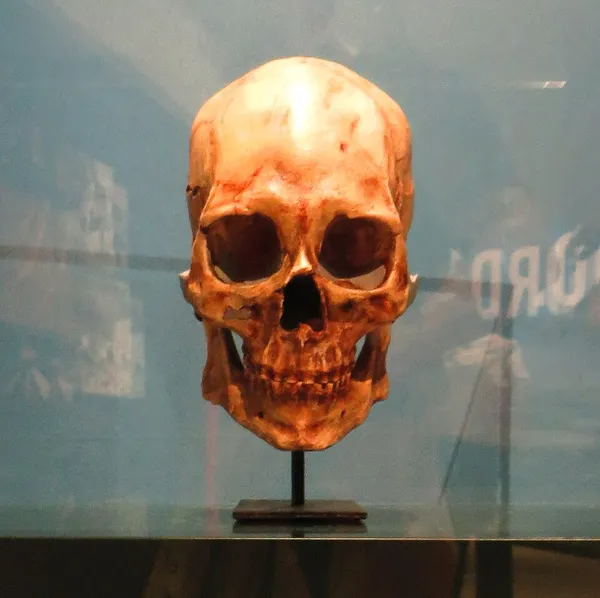
Kennewick Man or Ancient One was a Native American man who lived during the early Holocene whose skeletal remains were found in 1996 washed out on a bank of the Columbia River near Kennewick, Washington. Radiocarbon tests show the man lived about 8,400 to 8,700 years ago, making his skeleton one of the most complete ever found this old in the Americas, and thus of high scientific interest for understanding the peopling of the Americas. The discovery precipitated a nearly twenty-year-long dispute involving the Federal government, Native Americans, and scientists who wanted to study the remains. The Federal government, through the United States Army Corps of Engineers, held jurisdiction over the land where the remains were found and, thus, had legal custody. However, Native American tribes asserted legal rights to rebury the man under the Native American Graves Protection and Repatriation Act (NAGPRA), a federal law to repatriate Indian remains. Nevertheless, some members of the scientific community believed it was essential to conduct research on the skeleton and asserted he was only distantly related to today's Native Americans and was more closely related to Polynesian or Southeast Asian peoples, which would exempt the case from NAGPRA. The controversial case wound its way through courts for many years, including a period when scientists won access to study the remains. At the same time, technology for analyzing ancient DNA had been steadily improving. In 2015, scientists at the University of Copenhagen published a study which found that in comparison to contemporary human populations, Kennewick Man's genome is closest to that of modern Native Americans, though he is not associated with any specific modern tribe. In 2016, Congress passed legislation to return the remains to a coalition of Columbia basin tribes. Kennewick Man was reburied according to tribal traditions on February 18, 2017, with 200 members of five Columbia basin tribes in attendance, at an undisclosed location in the area. Within the scientific community since the 1990s, arguments for a non-Indian ancient history of the Americas, including by ancient peoples from Europe, have been losing ground in the face of ancient DNA analysis. The establishment of Kennewick Man's genetic affinity with modern Native Americans symbolically marked the "end of a [supposed] non-Indian ancient North America".
Also on this shelf
Calmecac.
Canadian heraldry.
See also
Uncatalogued shelfText from Wikipedia; plate via Wikimedia Commons. Text CC BY-SA 4.0; plate freely licensed (see Commons). Source record. Images and catalogue data are reproduced from open-access collections.