Art of the Americas
Ethnic groups in the Philippines
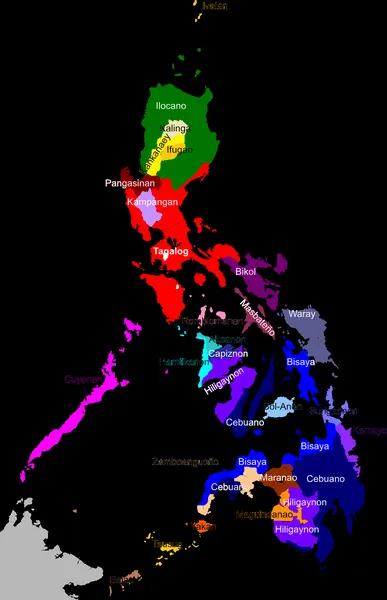
The Philippines is inhabited by more than 185 ethnolinguistic groups, many of which are classified as "Indigenous Peoples" under the country's Indigenous Peoples' Rights Act of 1997. Traditionally Muslim minorities from the southernmost island group of Mindanao are usually categorized together as Moro peoples, whether they are classified as Indigenous peoples or not. About 142 are classified as non-Muslim Indigenous people groups. Ethnolinguistic groups collectively known as the Lowland Christians, forms the majority ethnic group. The Muslim ethnolinguistic groups of Mindanao, Sulu, and Palawan are collectively referred to as the Moro people, a broad category that includes some Indigenous people groups and some non-Indigenous people groups. With a population of over 5 million people, they comprise about 5% of the country's total population. About 142 of the Philippines' Indigenous people groups are not classified as Moro peoples. Some of these people groups are commonly grouped together due to their strong association with a shared geographic area, although these broad categorizations are not always welcomed by the ethnic groups themselves. For example, the Indigenous peoples of the Cordillera Mountain Range in northern Luzon are often referred to using the exonym "Igorot people," or more recently, as the Cordilleran peoples. Meanwhile, the non-Moro peoples of Mindanao are collectively referred to as the Lumad, a collective autonym conceived in 1986 as a way to distinguish them from their neighboring Indigenous Moro and Visayan neighbors. Small Indigenous ethnic communities remain marginalized, and often poorer than the rest of society. About 86 to 87 percent of the Philippine population belong to the 19 ethnolinguistic groups which are classified as neither Indigenous nor Moro. These groups are collectively referred to as "Lowland Christianized groups," to distinguish them from the other ethnolinguistic groups. The most populous of these groups, with populations exceeding a million individuals, are the Ilocano, the Pangasinense, the Kapampangan, the Tagalog, the Bicolano, and the Visayans (including the Cebuano, the Boholano, the Hiligaynon/Ilonggo, and the Waray).
Also on this shelf
Chavín de Huántar.
Acolhua.
See also
Uncatalogued shelfText from Wikipedia; plate via Wikimedia Commons. Text CC BY-SA 4.0; plate freely licensed (see Commons). Source record. Images and catalogue data are reproduced from open-access collections.