Art of the Americas
History of paper
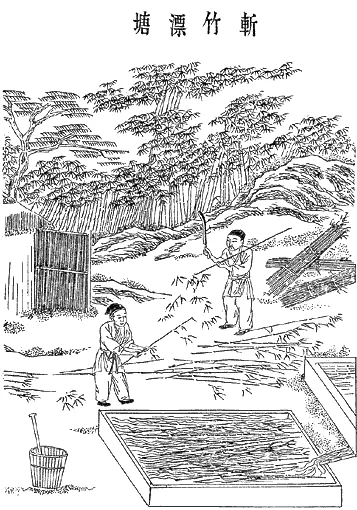
Paper is a thin nonwoven material traditionally made from a combination of milled plant and other textile fibres. The first paper-like plant-based writing sheet was papyrus in Egypt, but the first true papermaking process was documented in China during the Eastern Han period (25–220 CE), traditionally attributed to the court official Cai Lun. This plant-puree conglomerate produced by pulp mills and paper mills was used for writing, drawing, and money. During the 8th century, Chinese paper making spread to the Islamic world, replacing papyrus. By the 11th century, papermaking had reached Europe, where it initially coexisted with animal-skin-based parchment before eventually replacing it, alongside wax tablets and thin wooden leaf tablets. By the 13th century, papermaking had been refined, with paper mills in Spain using waterwheels. Later improvements to the papermaking process came in 19th-century Europe with the invention of wood-based papers. Although there were precursors such as papyrus in the Mediterranean world and amate in the pre-Columbian Americas, these are not considered true paper. Nor is true parchment considered paper: used principally for writing, parchment is heavily prepared animal skin that predates paper and possibly papyrus. In the 20th century, with the advent of plastic manufacture, some plastic "paper" was introduced, as well as paper-plastic laminates, paper-metal laminates, and papers infused or coated with different substances to produce special properties.
Also on this shelf
Lithic stage.
Jaguar.
See also
Uncatalogued shelfText from Wikipedia; plate via Wikimedia Commons. Text CC BY-SA 4.0; plate freely licensed (see Commons). Source record. Images and catalogue data are reproduced from open-access collections.