Art of the Americas
History of painting
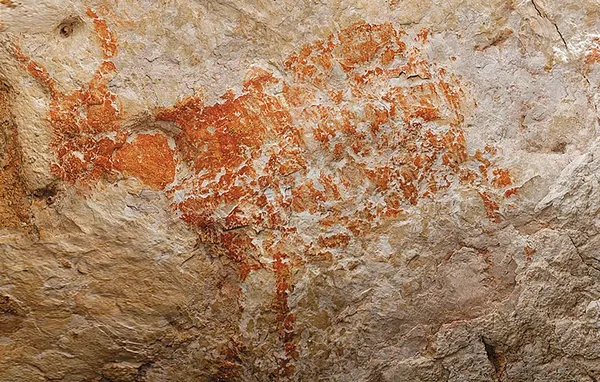
The history of painting reaches back in time to artifacts and artwork created by pre-historic artists, and spans all cultures. It represents a continuous, though periodically disrupted, tradition from Antiquity. Across cultures, continents, and millennia, the history of painting consists of an ongoing river of creativity that continues into the 21st century. Until the early 20th century it relied primarily on representational, religious and classical motifs, after which time more purely abstract and conceptual approaches gained favor. Developments in Eastern painting historically parallel those in Western painting, in general, a few centuries earlier. African art, Jewish art, Islamic art, Indonesian art, Indian art, Chinese art, and Japanese art each had significant influence on Western art, and vice versa. Initially serving utilitarian purpose, followed by imperial, private, civic, and religious patronage, Eastern and Western painting later found audiences in the aristocracy and the middle class. From the Modern era, the Middle Ages through the Renaissance painters worked for the church and a wealthy aristocracy. Beginning with the Baroque era artists received private commissions from a more educated and prosperous middle class. Finally in the West the idea of "art for art's sake" began to find expression in the work of the Romantic painters like Francisco de Goya, John Constable, and J. M. W. Turner. The 19th century saw the rise of the commercial art gallery, which provided patronage in the 20th century.
Also on this shelf
Chumash people.
Caral.
See also
Uncatalogued shelfText from Wikipedia; plate via Wikimedia Commons. Text CC BY-SA 4.0; plate freely licensed (see Commons). Source record. Images and catalogue data are reproduced from open-access collections.