Arms and Armour
Cape Coast Castle
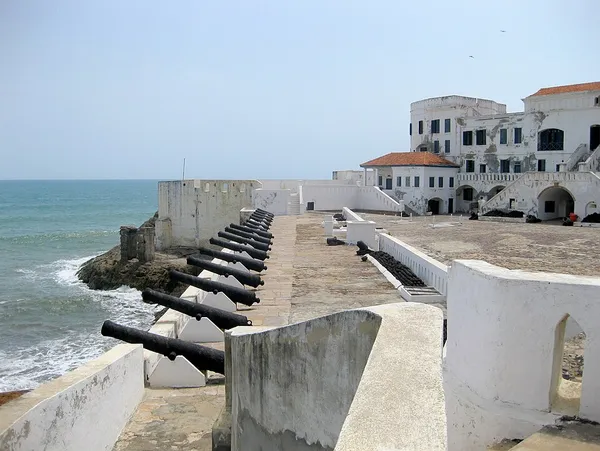
Cape Coast Castle (Swedish: Carolusborg) is one of about forty "slave castles", or large commercial forts, built on the Gold Coast of West Africa (now Ghana) by European traders. Cape Coast Castle is located in the Central Region of Ghana. It was originally a Portuguese "feitoria" or trading post, established in 1555, which was named Cabo Corso, meaning "Short Cape." In 1653, a timber fort was constructed by the Swedish Africa Company. The fort originally was named Carolusborg after Charles X Gustav and was built as a center for timber and gold trade. In the 18th century, its dungeons were used in the Atlantic slave trade. Other Ghanaian slave castles include Elmina Castle and Fort Christiansborg. They were used to harbor enslaved Africans before they were loaded onto ships and sold in the Americas, especially the Caribbean. This "gate of no return" was the last stop before crossing the Atlantic Ocean. Cape Coast Castle, along with other forts and castles in Ghana, are included on the UNESCO World Heritage List because of their testimony to the Atlantic gold and slave trades. The large quantity of gold dust found in Ghana was what primarily attracted European traders, and many natives of Cape Coast used this to their advantage. In exchange for gold, mahogany, and other locally produced goods and enslaved captives, local Africans received clothing, blankets, spices, sugar, silk and many other items. Cape Coast Castle was a market where this barter trade took place. In addition, the "Account of the Limits and Trade of the Royal African Company" stated the agent-general at Cape Coast Castle would supply trading forts with goods intended to be traded for gold, ivory, and slaves. Enslaved Africans were a valuable commodity in the Americas, the Middle East, and elsewhere, and enslaved people were the main trade in Cape Coast. Due to this, many changes were made to the fort. One of the alterations was the addition of large, underground dungeons that could hold as many as a thousand enslaved people awaiting export. Many European nations flocked to the area in order to get a foothold in the slave trade.
Also on this shelf
Hokushin-ron.
History of the British 1st Division during the world wars.
See also
Uncatalogued shelfText from Wikipedia; plate via Wikimedia Commons. Text CC BY-SA 4.0; plate freely licensed (see Commons). Source record. Images and catalogue data are reproduced from open-access collections.