Arms and Armour
Japanese castle
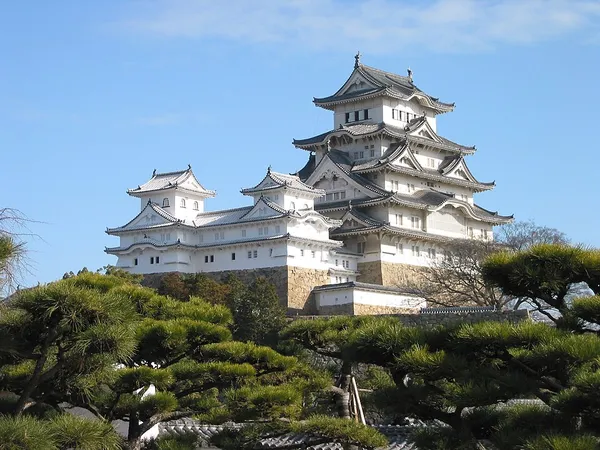
Japanese castles (城, kun'yomi: shiro; on'yomi: jō) are fortresses constructed primarily of wood and stone. They evolved from the wooden stockades of earlier centuries and came into their best-known form in the 16th century. Castles in Japan were built to guard important or strategic sites, such as ports, river crossings, or crossroads, and almost always incorporated the landscape into their defenses. Though they were built to last and used more stone in their construction than most Japanese buildings, castles were still constructed primarily of wood, and many were destroyed over the years. This was especially true during the Sengoku period (1467–1603), when many of these castles were first built. However, many were rebuilt, either later in the Sengoku period, in the Edo period (1603–1867) that followed, or more recently, as national heritage sites or museums. Today there are more than one hundred castles extant, or partially extant, in Japan; it is estimated that once there were five thousand. Some castles, such as the ones at Matsue and Kōchi, both built in 1611, have main keeps or other buildings that remain extant in their historical forms, not having suffered any damage from sieges or other threats. Hiroshima Castle, on the opposite end of the spectrum, was destroyed in the atomic bombing, and was rebuilt in 1958 as a museum, though it does retain many of its original stone walls. The character for castle, '城', is pronounced shiro (its kun'yomi) when used as a standalone word. However, when attached to another word (such as in the name of a particular castle), it is read as jō (its Chinese-derived on'yomi). Thus, for example, Osaka Castle is called Ōsaka-jō (大阪城) in Japanese.
Also on this shelf
Actions of 30 September – 4 October 1917.
Albert Kesselring.
See also
Uncatalogued shelfText from Wikipedia; plate via Wikimedia Commons. Text CC BY-SA 4.0; plate freely licensed (see Commons). Source record. Images and catalogue data are reproduced from open-access collections.