Arms and Armour
Device Forts
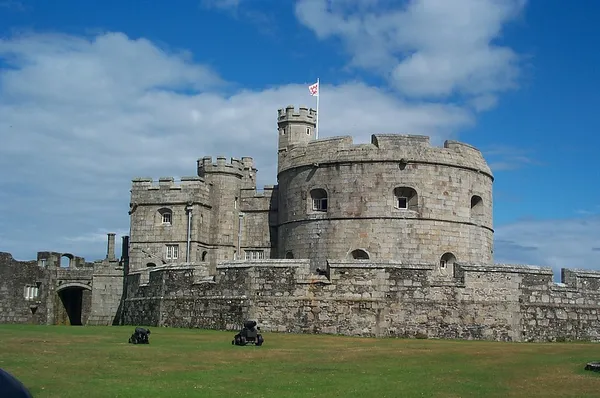
The Device Forts, also known as Henrician castles and blockhouses, were a series of artillery fortifications built to defend the coast of England and Wales by Henry VIII. Traditionally, the Crown had left coastal defences in the hands of local lords and communities but the threat of French and Spanish invasion led the King to issue an order, called a "device", for a major programme of work between 1539 and 1547. The fortifications ranged from large stone castles positioned to protect the Downs anchorage in Kent, to small blockhouses overlooking the entrance to Milford Haven in Pembrokeshire, and earthwork bulwarks along the Essex coast. Some forts operated independently, others were designed to be mutually reinforcing. The Device programme was hugely expensive, costing a total of £376,000 (estimated as between £2 and £82 billion in today's money); much of this was raised from the proceeds of the Dissolution of the Monasteries a few years before. These utilitarian fortifications were armed with artillery, intended to be used against enemy ships before they could land forces or attack ships lying in harbour. The first wave of work between 1539 and 1543 was characterised by the use of circular bastions and multi-tiered defences, combined with many traditional medieval features. These designs contained serious military flaws, however, and the second period of construction until 1547 saw the introduction of angular bastions and other innovations probably inspired by contemporary thinking in mainland Europe. The castles were commanded by captains appointed by the Crown, overseeing small garrisons of professional gunners and soldiers, who would be supplemented by the local militia in an emergency. Despite a French raid against the Isle of Wight in 1545, the Device Forts saw almost no action before peace was declared in 1546. Some of the defences were left to deteriorate and were decommissioned only a few years after their construction. After war broke out with Spain in 1569, Elizabeth I improved many of the remaining fortifications, including during the attack of the Spanish Armada of 1588. By the end of the century, the defences were badly out of date and for the first few decades of the 17th century many of the forts were left to decay.
Also on this shelf
Israel–Taiwan relations.
Carreg Cennen Castle.
See also
Uncatalogued shelfText from Wikipedia; plate via Wikimedia Commons. Text CC BY-SA 4.0; plate freely licensed (see Commons). Source record. Images and catalogue data are reproduced from open-access collections.