Arms and Armour
Constantinople
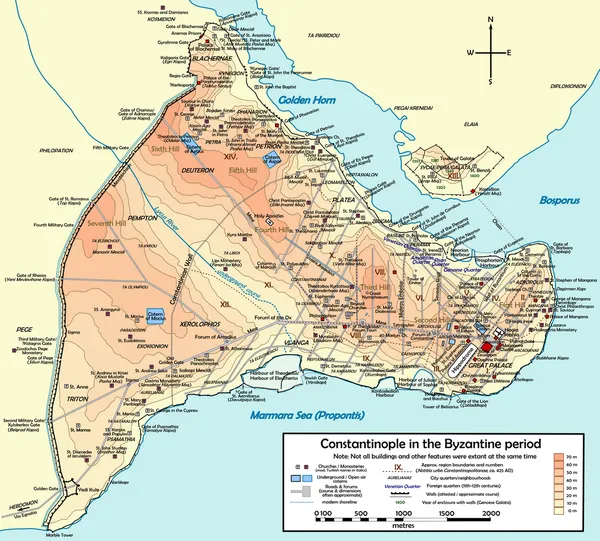
Constantinople, the modern Istanbul, was the capital of the Roman and Byzantine Empire from 330 until its takeover by the Ottoman Empire in 1453. After this, it continued to function as the Ottoman capital Konstantiniyye until the abolition of the Ottoman sultanate in 1922. It was located at the core of the modern city of Istanbul, on a peninsula at the southeastern tip of Thrace in Europe; with the Bosporus strait and the ancient cities of Chalcedon and Chrysopolis in Bithynia, Anatolia (Asia Minor) to the east; the Golden Horn and the citadel of Galata (Pera) to the north; the Sea of Marmara to the south; and the Princes' Islands to the southeast. Constantinople was founded on the site of the existing city of Byzantium in 324, during the reign of Constantine the Great, initially as "New Rome". In 330 it became the new capital of the Roman Empire, and continued in that role after the empire was divided in an Eastern and Western half and after the Western Roman Empire ended in the 5th century. The ascendancy of Constantinople marks the empire's "Byzantine" era. From the mid-5th century to the early 13th century, Constantinople was the largest and wealthiest city in Europe. The city became famous for its architectural masterpieces, such as Hagia Sophia, the cathedral of the Eastern Orthodox Church, which served as the seat of the Ecumenical Patriarchate; the Imperial Palace of the emperors; the Hippodrome; the Golden Gate of the Land Walls; and opulent aristocratic palaces. The University of Constantinople was founded in the 5th century and included a vast Imperial Library, which contained more than 100,000 volumes. Constantinople was famous for its massive and complex fortifications, which ranked among the most sophisticated defensive architecture of antiquity; the Theodosian Walls consisted of a double wall lying about 2 kilometres (1.2 mi) to the west of the first wall and a moat with palisades in front. Constantinople's location between the Golden Horn and the Sea of Marmara reduced the land area that required defensive walls. The city was constructed intentionally to rival Rome, and it was claimed that several elevations within its walls matched Rome's seven hills.
Also on this shelf
Capture of Daugavgrīva.
Blackness Castle.
See also
Uncatalogued shelfText from Wikipedia; plate via Wikimedia Commons. Text CC BY-SA 4.0; plate freely licensed (see Commons). Source record. Images and catalogue data are reproduced from open-access collections.