Arms and Armour
Henry V of England
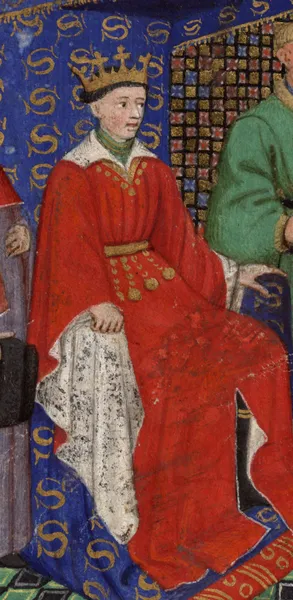
Henry V (16 September 1386 – 31 August 1422), also called Henry of Monmouth, was King of England, Lord of Ireland, and Duke of Aquitaine from 1413 until his death in 1422. His victory at Agincourt in 1415 and his conquest of Normandy gave England the upper hand in the Hundred Years' War and led, by the Treaty of Troyes in 1420, to his recognition as heir and regent of France. This was the high-water mark of the English cause in the war. Celebrated in William Shakespeare's Henriad as one of the greatest warrior-kings of medieval England, Henry was also a forceful ruler at home, restoring public order, working closely with Parliament, and enforcing a strict religious orthodoxy. Henry of Monmouth was the eldest son of Henry IV, and became heir apparent and Prince of Wales after his father seized the throne from Richard II in 1399. During his father's reign, he gained military experience in Wales against the Glyndŵr rebellion and in fighting the powerful Percy family of Northumberland, and played an important part at the Battle of Shrewsbury when only 16. As his father's health declined, Henry took an increasingly central role in government, though disagreements between the two men led to political conflict. Henry succeeded to the throne after his father's death in March 1413 and revived the long-standing English claim to the French throne. In 1415, Henry renewed active warfare with France, opening the Lancastrian phase of the Hundred Years' War (1415–1453). His first campaign successfully besieged Harfleur and won a celebrated victory at Agincourt, which strengthened his position in England and lent weight to his claim. A second expedition from 1417 set out to conquer Normandy, recovering for the English crown a duchy lost two centuries earlier; by 1419, his army stood before Paris. Exploiting the civil war that divided France, and allying with Burgundy after the murder of Duke John the Fearless, Henry was able to impose the Treaty of Troyes on Charles VI. The treaty made him regent and heir to the French throne, disinherited the king's own son, the Dauphin Charles, and provided for his marriage to Charles's daughter Catherine of Valois. It envisaged a union of the two crowns in Henry's person on Charles's death.
Also on this shelf
63rd (Royal Naval) Division.
Battle of Bomarsund.
See also
Uncatalogued shelfText from Wikipedia; plate via Wikimedia Commons. Text CC BY-SA 4.0; plate freely licensed (see Commons). Source record. Images and catalogue data are reproduced from open-access collections.