Arms and Armour
Fall of the Western Roman Empire
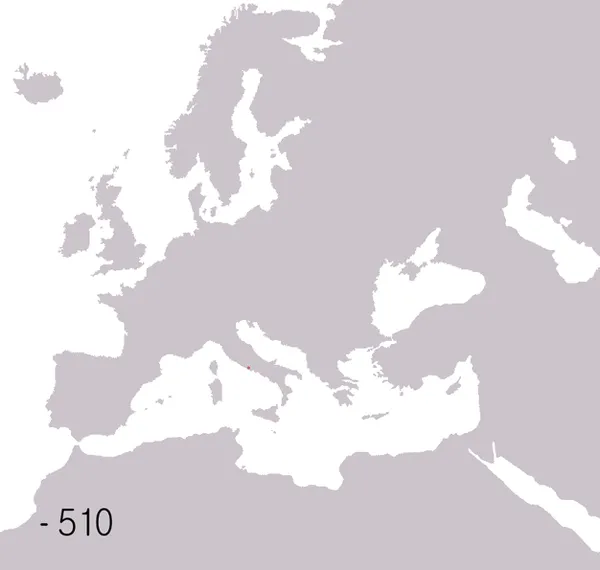
The fall of the Western Roman Empire, also called the fall of the Roman Empire or the fall of Rome, was the loss of central political control in the Western Roman Empire, a process in which the Empire failed to enforce its rule, and its vast territory was divided among several successor polities. The Roman Empire lost the strengths that had allowed it to exercise effective control over its Western provinces; modern historians posit factors including the effectiveness and numbers of the army, the health and numbers of the Roman population, the strength of the economy, the competence of the emperors, the internal struggles for power, the religious changes of the period, and the efficiency of the civil administration. Increasing pressure from invading peoples outside Roman culture also contributed greatly to the collapse. Climatic changes and both endemic and epidemic diseases drove many of these immediate factors. The reasons for the collapse are major subjects of the historiography of the ancient world and they inform much modern discourse on state failure. In 376, a large migration of Goths and other non-Roman people, fleeing from the Huns, entered the Empire. Roman forces were unable to exterminate, expel or subjugate them (as was their normal practice). In 395, after winning two destructive civil wars, Theodosius I died. He left a collapsing field army, and the Empire divided between the warring ministers of his two incapable sons. Goths and other non-Romans became a force that could challenge either part of the Empire. Further barbarian groups crossed the Rhine and other frontiers. The armed forces of the Western Empire became few and ineffective, and despite brief recoveries under able leaders, central rule was never again effectively consolidated. By 476, the position of Western Roman Emperor wielded negligible military, political, or financial power, and had no effective control over the scattered Western domains that could still be described as Roman. Barbarian kingdoms had established their own power in much of the area of the Western Empire.
Also on this shelf
Battle of the Teutoburg Forest.
Dudley Castle.
See also
Uncatalogued shelfText from Wikipedia; plate via Wikimedia Commons. Text CC BY-SA 4.0; plate freely licensed (see Commons). Source record. Images and catalogue data are reproduced from open-access collections.