Arms and Armour
Battle of France
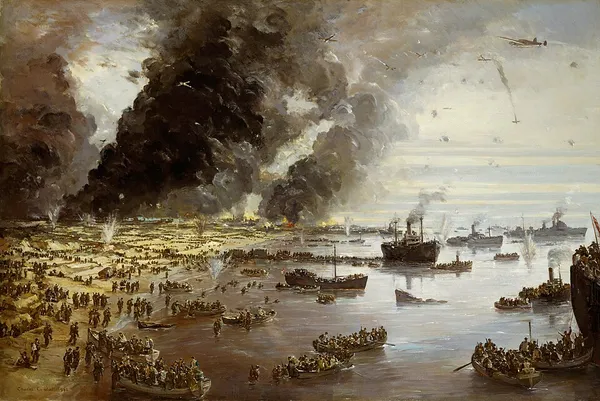
The Battle of France (French: Bataille de France; 10 May – 25 June 1940), also known as the Fall of France, was the German invasion of the Low Countries (Belgium, Luxembourg and the Netherlands) and France during the Second World War. The plan for the invasion of the Low Countries and France was called Fall Gelb (Case Yellow or the Manstein plan). Fall Rot (Case Red) was planned to finish off the French and British after the evacuation at Dunkirk. The Low Countries and France were defeated and occupied by Axis troops down to the French demarcation line. On 3 September 1939, France and Britain declared war on Nazi Germany, over the German invasion of Poland on 1 September. In early September 1939, the French army began the limited Saar Offensive but by mid-October had withdrawn to the start line. On 10 May 1940, Wehrmacht armies invaded Belgium, Luxembourg, the Netherlands and parts of France. In Fall Gelb (Case Yellow), German armoured units advanced through the Ardennes, crossed the Meuse and raced down the Somme valley, cutting off and surrounding the Allied units that had advanced into Belgium to meet the German armies there. British, Belgian and French forces were pushed back to the sea by the Germans where the British and French navies evacuated the encircled elements of the British Expeditionary Force (BEF) and the French and Belgian armies from Dunkirk in Operation Dynamo. German forces began Fall Rot (Case Red) on 5 June 1940. The remaining Allied divisions in France, sixty French and two British, made a determined stand on the Somme and Aisne rivers but were defeated by the German combination of air superiority and armoured mobility. Italy entered the war on 10 June 1940 and began the Italian invasion of France. German armies outflanked the Maginot Line and pushed deep into France, occupying Paris unopposed on 14 June. After the flight of the French government and the collapse of the French Army, German commanders met with French officials on 18 June to negotiate an end to hostilities. On 22 June 1940, the Second Armistice at Compiègne was signed by France and Germany. The fascist and collaborationist Vichy government, led by Marshal Philippe Pétain replaced the Third Republic and German military occupation began along the French North Sea and Atlantic coasts and their hinterlands.
Also on this shelf
Battle of Maldon.
Bastion.
See also
Uncatalogued shelfText from Wikipedia; plate via Wikimedia Commons. Text CC BY-SA 4.0; plate freely licensed (see Commons). Source record. Images and catalogue data are reproduced from open-access collections.