Arms and Armour
European theatre of World War II
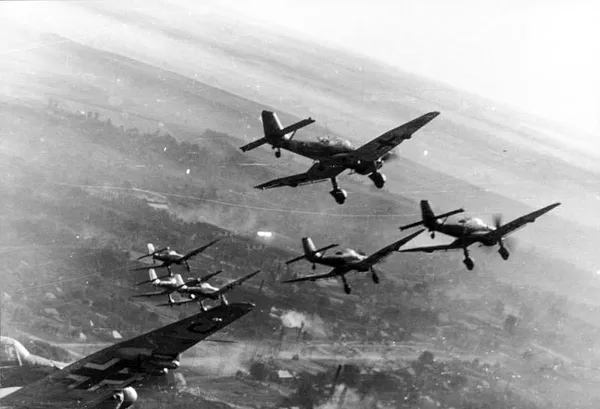
The European theatre of World War II, lasting from September 1939 to May 1945, was one of two main theatres of combat during World War II, the other being the Pacific War. The combat in Europe resulted in at least 39 million deaths, and a dramatic change in the balance of power on the continent. The Allied powers, including (for most of the war) the United Kingdom, United States, Soviet Union, and France, fought the Axis powers, including the fascist states of Nazi Germany and Italy, on multiple fronts: Western, Eastern, Scandinavian, and Mediterranean. Germany, meanwhile, enacted the Holocaust, a genocide of six million Jews, within its vast occupied territories across Europe. In 1938, German dictator Adolf Hitler had his country annex Austria and part of Czechoslovakia; this was motivated in part by the Nazi Party's racist ideology, which held that Germany needed to gain "living space" for its so-called "Aryan race" to survive. The country was supported by Italy, led by dictator Benito Mussolini. World War II began with Germany's invasion of Poland on 1 September 1939. Poland's allies, France and the U.K., declared war on Germany days later, but were unwilling to engage in active combat. The Soviet Union, led by Joseph Stalin, soon invaded eastern Poland, having signed a non-aggression pact with Germany. Poland was subsequently partitioned into Soviet and German occupied territories. In 1940, Germany invaded Norway, Denmark, France, the Netherlands, Belgium, and Luxembourg, and Italy invaded Greece. Germany also began the Battle of Britain and the Blitz, two aerial bombardments of the U.K. The British prime minister was Winston Churchill. In 1941, Germany invaded Yugoslavia and Greece, and began invading the Soviet Union, which brought the Soviets into the Allied war effort. Later that year, Germany declared war on the U.S., who also joined the Allies. The U.S. president was Franklin D. Roosevelt. In 1942 and 1943, the Soviets halted the German invasion of their country at the Battle of Stalingrad, while the Allies bombed German industrial facilities. In 1943, the Allied powers began invading Italy, leading to the end of Mussolini's regime. Germans and Italians loyal to the Axis continued fighting the Allies. In 1944, the Allies liberated Rome, then began invading German-occupied Western Europe, starting with Normandy in northern France.
Also on this shelf
Clitheroe Castle.
Battle of Jaffa (1192).
See also
Uncatalogued shelfText from Wikipedia; plate via Wikimedia Commons. Text CC BY-SA 4.0; plate freely licensed (see Commons). Source record. Images and catalogue data are reproduced from open-access collections.