Arms and Armour
Between the Crusades, 1149–1189
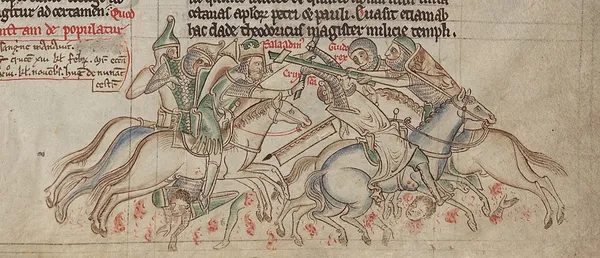
The period between the end of the Second Crusade in 1149 and the beginning of the Third Crusade in 1189 saw the Kingdom of Jerusalem and other Crusader states be reduced from a vibrant presence in the Holy Land to just a few cities and castles. Beginning with the conquests of Zengi, followed by those of his son Nur al-Din and then Saladin, the unthinkable happened, with Jerusalem falling to Muslim forces. The Frankish presence in the Levant, limited to the cities of Tyre, Tripoli and Antioch, caused a call to arms in the West for the reconquest of the Holy Land through a new crusade. When Zengi led his army to cause the fall of Edessa in 1144, he started a movement that would unite the Muslims in the Levant against the Frankish presence. This movement grew through Nur al-Din's creation of a Syrian-Egyptian condominium that was finalized by Saladin's declaration of being the sultan of Egypt and Syria. The seminal conflict between Islam and Christianity was seen at the 1187 Battle of Hattin from which the fall of Jerusalem was preordained. The West would respond with the Third Crusade.
Also on this shelf
Byzantine army (Komnenian era).
German fortification of Guernsey.
See also
Uncatalogued shelfText from Wikipedia; plate via Wikimedia Commons. Text CC BY-SA 4.0; plate freely licensed (see Commons). Source record. Images and catalogue data are reproduced from open-access collections.