Arms and Armour
Great Siege of Gibraltar
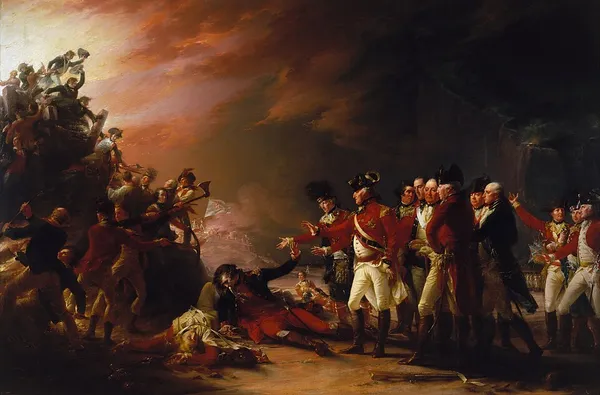
The Great Siege of Gibraltar was an unsuccessful attempt by Spain and France to capture Gibraltar from Britain during the American Revolutionary War. It was the largest battle in the war by number of combatants. On 16 June 1779, Spain entered the war on the side of France with the primary war aim of capturing Gibraltar from the British. The vulnerable garrison of Gibraltar, commanded by George Eliott, was besieged from June 1779 to February 1783. Initially, the siege was carried out solely by Spanish forces under Martín Álvarez de Sotomayor. The siege proved to be a failure because two British relief convoys entered unmolested, the first under Admiral of the White George Rodney in 1780 and the second under Admiral George Darby in 1781, despite the presence of the Spanish Navy. A major assault was planned by the Spanish in late 1781, but the British garrison sortied in November of that year and destroyed many of the forward batteries. Following the Spanish failure to defeat the garrison or prevent the arrival of relief convoys, the besiegers were reinforced by French forces under Louis de Crillon, who took over command in early 1782. After a lull in the siege, during which the Franco-Spanish besiegers gathered more guns, ships and troops, a "Grand Assault" was launched on 13 September 1782. This involved huge numbers—60,000 attackers, 49 ships of the line and 10 specially designed and newly invented floating batteries—against 5,000 British defenders. The assault proved to be a disastrous and humiliating failure, resulting in heavy losses for the French and Spanish. This was the largest action fought during the war in terms of numbers. The final sign of defeat for the besiegers came when a crucial British relief convoy under Admiral Richard Howe slipped through the blockading fleet and arrived at the garrison in October 1782. The siege was finally lifted on 7 February 1783 and resulted in a decisive victory for the British. It was a factor in ending the American Revolutionary War—the Peace of Paris negotiations were reliant on news from the siege, particularly at its climax. At three years, seven months and twelve days, it is the longest siege ever endured by the British Armed Forces.
Also on this shelf
Hippeis.
Albert Kesselring.
See also
Uncatalogued shelfText from Wikipedia; plate via Wikimedia Commons. Text CC BY-SA 4.0; plate freely licensed (see Commons). Source record. Images and catalogue data are reproduced from open-access collections.