Arms and Armour
Castles in Great Britain and Ireland
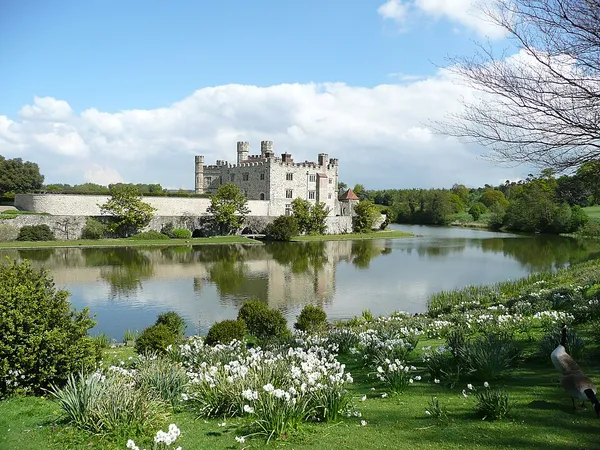
Castles have played an important military, economic and social role in Great Britain and Ireland since their introduction following the Norman invasion of England in 1066. Although a small number of castles had been built in England in the 1050s, the Normans began to build motte and bailey and ringwork castles in large numbers to control their newly occupied territories in England and the Welsh Marches. During the 12th century the Normans began to build more castles in stone – with characteristic square keep – that played both military and political roles. Royal castles were used to control key towns and the economically important forests, while baronial castles were used by the Norman lords to control their widespread estates. David I invited Anglo-Norman lords into Scotland in the early 12th century to help him colonise and control areas of his kingdom such as Galloway; the new lords brought castle technologies with them and wooden castles began to be established over the south of the kingdom. Following the Norman invasion of Ireland in the 1170s, under Henry II, castles were established there too. Castles continued to grow in military sophistication and comfort during the 12th century, leading to a sharp increase in the complexity and length of sieges in England. While in Ireland and Wales castle architecture continued to follow that of England, after the death of Alexander III the trend in Scotland moved away from the construction of larger castles towards the use of smaller tower houses. The tower house style would also be adopted in the north of England and Ireland in later years. In North Wales Edward I built a sequence of militarily powerful castles after the destruction of the last Welsh polities in the 1270s. By the 14th century castles were combining defences with luxurious, sophisticated living arrangements and heavily landscaped gardens and parks. Many royal and baronial castles were left to decline, so that by the 15th century only a few were maintained for defensive purposes. A small number of castles in England and Scotland were developed into Renaissance Era palaces that hosted lavish feasts and celebrations amid their elaborate architecture. Such structures were beyond the means of all but royalty and the richest of the late-medieval barons.
Also on this shelf
Battle of Kallo.
Fort Niagara.
See also
Uncatalogued shelfText from Wikipedia; plate via Wikimedia Commons. Text CC BY-SA 4.0; plate freely licensed (see Commons). Source record. Images and catalogue data are reproduced from open-access collections.