Arms and Armour
Greco-Persian Wars
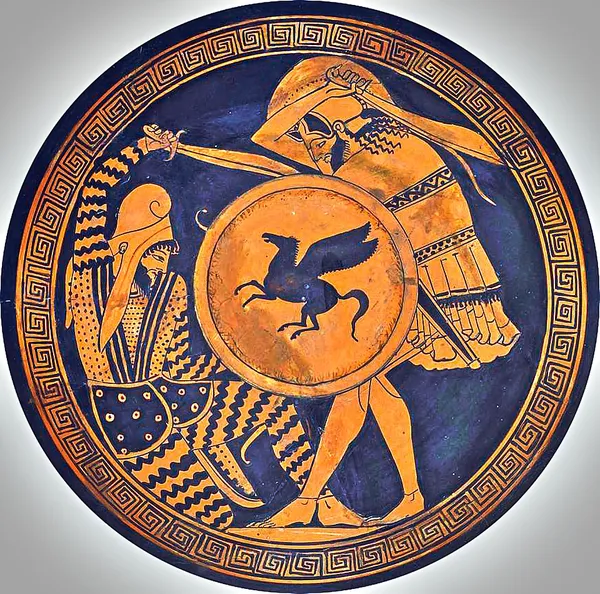
The Greco-Persian Wars, also called the Persian Wars, were a series of armed conflicts involving various Greek city-states and the Achaemenid Empire from 499 BC to 449 BC. The precipitating collision between the fractious political world of ancient Greece and the enormous empire of ancient Persia had begun when the Persian king Cyrus the Great conquered the Greek-inhabited region of Ionia in 547 BC. As they struggled to exert authority over the independent-minded Ionian cities, the Persians appointed Greek tyrants to rule each of them, though this would prove to be the source of much trouble for the Greeks and the Persians alike. In 499 BC, the Greek tyrant Aristagoras of Miletus embarked on what would ultimately be a failed expedition to conquer Naxos with Persian support. Anticipating his dismissal, Aristagoras incited Greek city-states in Asia Minor to join him in deposing their Persian rulers, sparking the Ionian Revolt. Despite initially lacking support from mainland Greece, Aristagoras secured alliances with Athens and Eretria that helped him capture and raze Sardis in 498 BC. In response to the loss of his regional capital city, the Persian king Darius the Great vowed to exact revenge against the Athenians and the Eretrians. Both sides then effectively stalemated until 495 BC, but in 494 BC, the Persian army consolidated and launched a major assault at the heart of the Ionion Revolt in Miletus; Ionia suffered a decisive defeat in the Battle of Lade, which enabled the collapse of the rebellion over the course of the following year. Seeking to protect the Achaemenid Empire from being threatened by further uprisings in Asia Minor, Darius embarked on a scheme to conquer the mainland Greeks themselves—both to prevent their political and military interference in Asia Minor and to fulfill his earlier vow to specifically punish Athens and Eretria for their role in the destruction of Sardis. In 492 BC, the first Persian invasion of Greece began under the command of Mardonius, who successfully re-subjugated Thrace and Macedon before several mishaps forced an early end to the rest of the campaign. In 490 BC, another Persian force was sent to Greece—this time across the Aegean Sea—under the command of Datis and Artaphernes, who successfully subjugated the Cyclades before razing Eretria.
Also on this shelf
Hesco bastion.
Château d'Acquigny.
See also
Uncatalogued shelfText from Wikipedia; plate via Wikimedia Commons. Text CC BY-SA 4.0; plate freely licensed (see Commons). Source record. Images and catalogue data are reproduced from open-access collections.