Arms and Armour
Economic and logistical aspects of the Napoleonic Wars
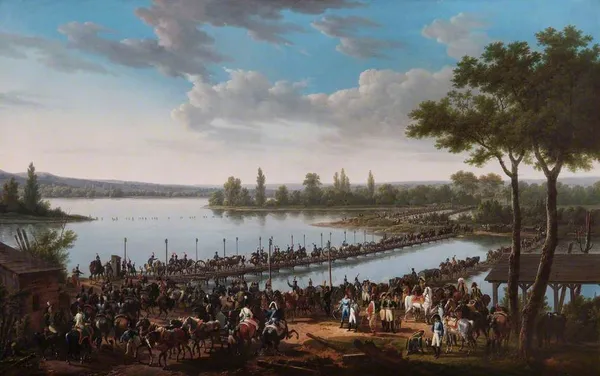
The economic and logistical aspects of the Napoleonic Wars describe all the economic factors involved in material management – economic policies, production, etc. – and financial management – funding war expenditures, etc. – of the wars conducted under the Consulate and the First Empire, as well as the economic causes and consequences of these conflicts. They also cover the management and organization of industrial resources for the production of weapons and military equipment, as well as military logistics and attendance for the supply of armies in the field. In any large-scale conflict, managing belligerents' economic and logistical resources for equipping and supplying their armed forces is one of the major aspects of "warfare," just as much as military tactics and strategy in theaters of operations and battlefields, and the Napoleonic wars were no exception. Napoleon took a personal interest in questions of logistics and "military economics" from the time of the Consulate, and was ably assisted by Pierre Daru, Intendant General of the Grande Armée from 1806 onwards, who later held various key positions in the military administration and stewardship of Napoleon's armies. Both men were responsible for the reform and organization of multiple bodies and services in charge of these logistical and administrative missions, such as the "commissaires-ordonnateurs de guerre", the "inspecteurs aux revues" and the train services. At the start of the 19th century, with the Industrial Revolution in full swing, France was much less involved in this process than its main adversary, the United Kingdom. It had to rely primarily on crafts and small-scale industry – the factories – to supply its armies with materials and equipment. With the military conquests of the Consulate and Empire added to those of the Revolution (notably Italy and Belgium), almost the whole of Europe found itself involved, willingly or unwillingly, in Napoleon's "war effort" until 1813, including its financing through war indemnities imposed on defeated nations. On the eve of the Russian campaign of 1812, Napoleon's army numbered some 690,000 French and foreign soldiers.
Also on this shelf
Battle of San Pasqual.
Hesco bastion.
See also
Uncatalogued shelfText from Wikipedia; plate via Wikimedia Commons. Text CC BY-SA 4.0; plate freely licensed (see Commons). Source record. Images and catalogue data are reproduced from open-access collections.