Arms and Armour
Citadel of Damascus
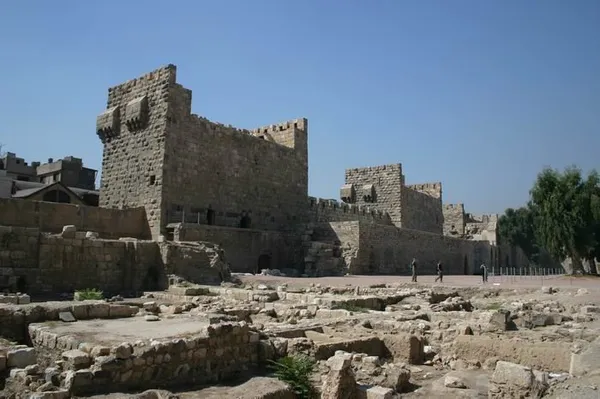
The Citadel of Damascus (Arabic: قلعة دمشق, romanized: Qalʿat Dimašq) is an Ayyubid-era medieval fortified palace and citadel in Damascus, Syria. It is part of the Ancient City of Damascus, which was listed as a UNESCO World Heritage Site in 1979. The location of the current citadel was first fortified in 1076 by the Turkman warlord Atsiz bin Uvak, although it is possible but not proven that a citadel stood on this place in the Hellenistic and Roman periods. After the assassination of Atsiz bin Uvak, the project was finished by the Seljuq ruler Tutush I. The emirs of the subsequent Burid and Zengid dynasties carried out modifications and added new structures to it. During this period, the citadel and the city were besieged several times by Crusader and Muslim armies. In 1174, the citadel was captured by Saladin, the Ayyubid sultan of Egypt, who made it his residence and had the defences and residential buildings modified. Saladin's brother Al-Adil rebuilt the citadel completely between 1203 and 1216 in response to the development of the counterweight trebuchet. After his death, power struggles broke out between the other Ayyubid princes and although Damascus switched hands several times, the citadel was taken by force only once, in 1239. The citadel remained in Ayyubid hands until the Mongols under their general Kitbuqa captured Damascus in 1260, thereby ending Ayyubid rule in Syria. After an unsuccessful revolt broke out in the citadel, the Mongols had most of it dismantled. After the defeat of the Mongols in 1260 by the Mamluks, who had succeeded the Ayyubids as rulers of Egypt, Damascus came under Mamluk rule. Except for brief periods in 1300 and 1401, when the Mongols conquered Damascus, the Mamluks controlled the citadel until 1516. In that year, Syria fell into the hands of the Ottoman Empire. Damascus surrendered without a fight and from the 17th century onward the citadel functioned as barracks for the Janissaries—Ottoman infantry units. The citadel started to fall into disrepair in the 19th century and its last military use was in 1925, when French soldiers shelled the old city from the citadel in response to the Great Syrian Revolt against the French Mandate of Syria. The citadel continued to serve as a barracks and prison until 1986, when excavations and restorations started.
Also on this shelf
Citadel of Barcelona.
Army.
See also
Uncatalogued shelfText from Wikipedia; plate via Wikimedia Commons. Text CC BY-SA 4.0; plate freely licensed (see Commons). Source record. Images and catalogue data are reproduced from open-access collections.