Arms and Armour
Cointet-element
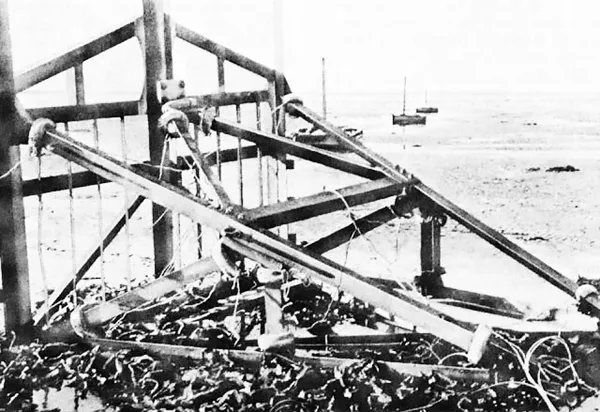
The Cointet-element, also known as a Belgian Gate or C-element, was a heavy steel fence about three metres (9 ft 10 in) wide and two metres (6 ft 7 in) high, typically mounted on concrete rollers, used as a mobile anti-tank obstacle during World War II. Each individual fence element weighed about 1,280 kg (2,820 lb) and was movable (e.g. with two horses) through the use of two fixed and one rotating roller. Its invention is attributed to a French colonel (later general), Léon-Edmond de Cointet de Fillain who came up with the idea in 1933 to be used in the Maginot Line. Besides their use as barricades to the entrances of forts, bridges and roads, the heavy fences were used in the Belgian "Iron Wall" of the Koningshooikt–Wavre Line (also known as "Dyle Line") and were re-used as beach obstacles on the Atlantic Wall defending Normandy from Allied invasion.
Also on this shelf
Arado Ar 234 Blitz.
BTR-152.
See also
Uncatalogued shelfText from Wikipedia; plate via Wikimedia Commons. Text CC BY-SA 4.0; plate freely licensed (see Commons). Source record. Images and catalogue data are reproduced from open-access collections.