Arms and Armour
Imjin War
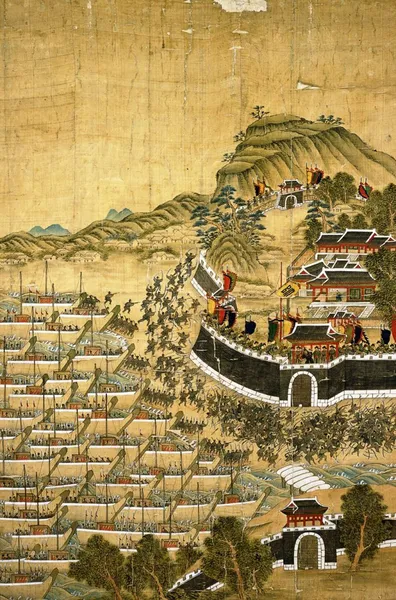
The Imjin War (Korean: 임진왜란; Hanja: 壬辰倭亂) was a series of two Japanese invasions of Korea: an initial invasion in 1592 also individually called the "Imjin War", a brief truce in 1596 between the conflicts, followed by a second invasion in 1597 called the Chŏngyu War (정유재란; 丁酉再亂). The conflict ended in 1598 with the withdrawal of Japanese forces from the Korean Peninsula after a military stalemate in Korea's southern provinces. The invasions were launched by Toyotomi Hideyoshi to conquer Korea, and Japan quickly occupied large portions of the country. However, reinforcements from Ming China and disruption of Japanese supply fleets by the Joseon Navy forced the Japanese forces to withdraw from the northern provinces. Thereafter, Joseon civilian militias engaged in guerrilla warfare against the occupying Japanese forces, and supply difficulties hampered both sides. At that point, the conflict ground to a stalemate. The first phase of the conflict ended in 1596. Japan invaded Korea again in 1597, and gained initial successes on land; similar to the previous campaign, the invading forces were later halted and withdrew to the peninsula's southern coastal regions. Ming and Joseon forces were unable to dislodge the Japanese from these positions. Both sides again became locked in a ten-month-long military stalemate. However, Toyotomi Hideyoshi later died and the Japanese were defeated at the Battle of Noryang, effectively ending the war. The invading forces were ordered to withdraw to Japan by the new governing Council of Five Elders soon thereafter. Peace negotiations between the parties followed, and continued for several years, ultimately resulting in the normalization of relations.
Also on this shelf
Governor's Lookout Battery.
Battle of Maldon.
See also
Uncatalogued shelfText from Wikipedia; plate via Wikimedia Commons. Text CC BY-SA 4.0; plate freely licensed (see Commons). Source record. Images and catalogue data are reproduced from open-access collections.