Arms and Armour
Cataphract
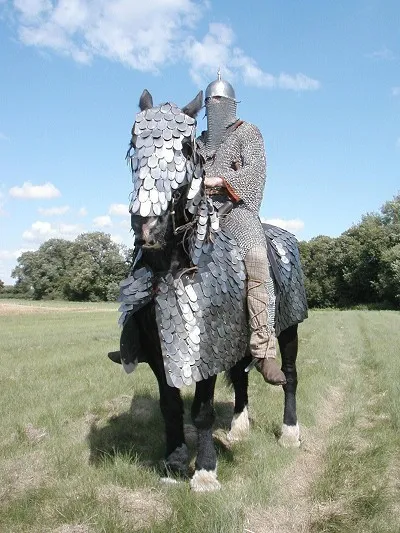
A cataphract was a form of armoured heavy cavalry that originated in Central Asia and was fielded in ancient warfare throughout Eurasia and Northern Africa. Historically, the cataphract was a very heavily armoured horseman, with both the rider and mount almost completely covered in scale or lamellar armour over chain mail, and typically wielding a kontos (lance) as his primary weapon. Cataphracts served as the elite cavalry force for most empires and nations that fielded them, primarily used for charges to break through opposing heavy cavalry and infantry formations. Chronicled by many historians from the earliest days of antiquity up until the High Middle Ages, they may have influenced the later European knights, through contact with the Eastern Roman Empire. Peoples and states deploying cataphracts at some point in their history included: the Scythians, Sarmatians, Alans, Medes, Parthians, Achaemenids, Sakas, Indians, Armenians, Seleucids, Attalid, Pontus, Greco-Bactrian, Sassanids, Romans, Goths, Byzantines, Georgians, Chinese, Koreans, Jurchens, Mongols, Tanguts and Songhai. In Europe, the fashion for heavily armoured Roman cavalry seems to have been a response to the Eastern campaigns of the Parthians and Sasanians in Anatolia, as well as numerous defeats at the hands of Iranian cataphracts across the steppes of Eurasia, most notably in the Battle of Carrhae (53 BC) in upper Mesopotamia. Traditionally, Roman cavalry was neither heavily-armoured nor decisive in effect; the Roman equites corps comprised mainly lightly-armoured horsemen bearing spears and swords and using light cavalry tactics to skirmish before and during battles, and then to pursue retreating enemies after a victory. The adoption of cataphract-like cavalry formations took hold among the late Roman army during the late 3rd and 4th centuries. The Emperor Gallienus (r. 253–268 AD) and his general and putative usurper Aureolus (died 268) arguably contributed much to the institution of Roman cataphract contingents in the Late Roman army.
Also on this shelf
Dogs in warfare.
Italian Renaissance sculpture.
See also
Uncatalogued shelfText from Wikipedia; plate via Wikimedia Commons. Text CC BY-SA 4.0; plate freely licensed (see Commons). Source record. Images and catalogue data are reproduced from open-access collections.