Arms and Armour
Historical European martial arts
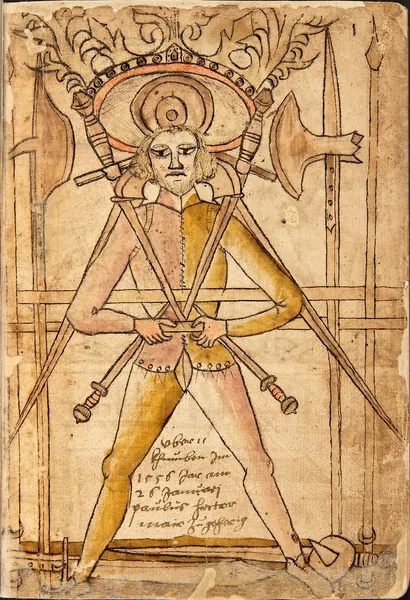
Historical European martial arts (HEMA) are martial arts of European origin, particularly using arts formerly practised, but having since died out or evolved into very different forms. While there is limited surviving documentation of the martial arts of classical antiquity (such as Greek wrestling or gladiatorial combat), most of the surviving dedicated technical treatises or martial arts manuals date to the late medieval period and the early modern period. For this reason, the focus of HEMA is de facto on the period of the half-millennium of ca. 1300 to 1800, with a German, Italian, and Spanish school flowering in the Late Middle Ages and the Renaissance (14th to 16th centuries), followed by French, English, and Scottish schools of fencing in the modern period (17th and 18th centuries). The Swedish HEMA Association Svenska HEMA-Förbundet defines HEMA as any martial art predating 1950 and has a living tradition or preserved source material. Martial arts of the 19th century such as classical fencing, and even early hybrid styles such as Bartitsu, may also be included in the term HEMA in a wider sense, as may traditional or folkloristic styles attested in the late 19th and early 20th centuries, including forms of folk wrestling and traditional stick-fighting methods. The term Western martial arts (WMA) is sometimes used in the United States and in a wider sense including modern and traditional disciplines. Longsword is arguably the most popular weapon trained in HEMA today. In Germany, about 92% of all HEMA clubs offer longsword training.
Also on this shelf
Battle of Hattin.
Godert de Ginkel, 1st Earl of Athlone.
See also
Uncatalogued shelfText from Wikipedia; plate via Wikimedia Commons. Text CC BY-SA 4.0; plate freely licensed (see Commons). Source record. Images and catalogue data are reproduced from open-access collections.