Arms and Armour
Inner bailey
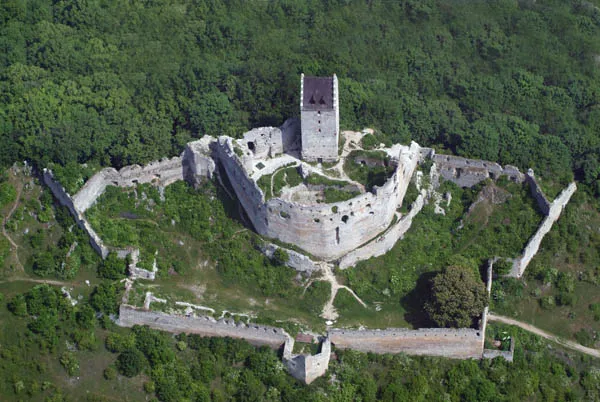
The inner bailey or inner ward of a castle is the strongly fortified enclosure at the heart of a medieval castle. It is protected by the outer ward and, sometimes also a Zwinger, moats, a curtain wall and other outworks. Depending on topography it may also be called an upper bailey or upper ward. The inner bailey enclosed the most important living quarters and defensive elements for the lord and his family, e.g. the great hall, the palas, the tower house and the keep or bergfried. The castle well or cistern was usually found in the inner bailey, because water supplies were particularly important in the past in order to be able to withstand a siege for any length of time. The inner bailey is usually the oldest part of a castle, because it contains those buildings that were the first to be built during its construction. It often has flanking towers that enabled grazing fire to be brought to bear in front of the curtain wall and gave additional protection to the castle gate. In complex castles the buildings of the inner ward were frequently grouped in a ring around a courtyard which acted as a central storage area and – if it were large enough – as a tournament arena. The terms "upper bailey" or "upper ward" are sometimes used to describe the inner bailey of a hill castle or water castle where the main ward was usually higher than the outer or "lower" bailey. Similarly the Romanesque inner ward of Hohensalzburg Fortress is still called the Hoher Stock ("Upper Storey").
Also on this shelf
Hayne's Cave Battery.
Churchill tank.
See also
Uncatalogued shelfText from Wikipedia; plate via Wikimedia Commons. Text CC BY-SA 4.0; plate freely licensed (see Commons). Source record. Images and catalogue data are reproduced from open-access collections.