Arms and Armour
Cáceres, Spain
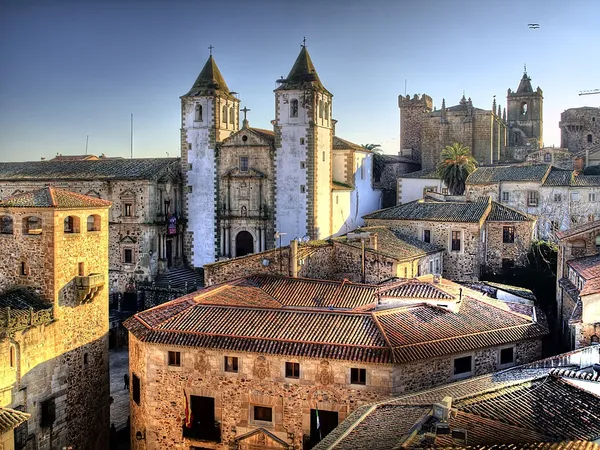
Cáceres (US: KAH-sə-rayss, Spanish: [ˈkaθeɾes] ) is a city and municipality located in the center of the autonomous community of Extremadura in southern Spain. It is the capital and most populated municipality of the province of the same name and hosts the seat of the Extremadura's Regional Supreme Court. Cáceres' area —1,750.33 km2 (675.81 sq mi) — is the greatest of any municipality in Spain. As of 2025, it has a population of 96,598 inhabitants, of which 95,441 live in the city itself. Numerous inhabited places are scattered throughout the municipality, including castles and farmhouses with several centuries of history. The medieval walled city was declared a World Heritage City by UNESCO in 1986. Since 2008 the city has been organized into four districts: Old Town Center, North, West, and South; a fifth district, Pedanías, covers the non-urban part of the term. The actual municipal population data varies significantly, fluctuating by more than 30,000 people primarily related to educational centers such as the Cáceres Campus of the University of Extremadura or the CEFOT-1 of the Army. The city usually empties in summer, when many residents return to their towns of origin. Cáceres lies at the feet of the Sierra de la Mosca, a modest hill range. It is part of the Vía de la Plata ("Silver Route") path of the Camino de Santiago that crosses the west of the Iberian Peninsula in a north–south direction. The Universidad de Extremadura, and two astronomical observatories are located in Cáceres, as well as several regional government departments. The city is also a co-see of the Catholic Diocese of Coria-Cáceres.
Also on this shelf
Battle of Polygon Wood.
Cap-house.
See also
Uncatalogued shelfText from Wikipedia; plate via Wikimedia Commons. Text CC BY-SA 4.0; plate freely licensed (see Commons). Source record. Images and catalogue data are reproduced from open-access collections.