Arms and Armour
Germanic peoples
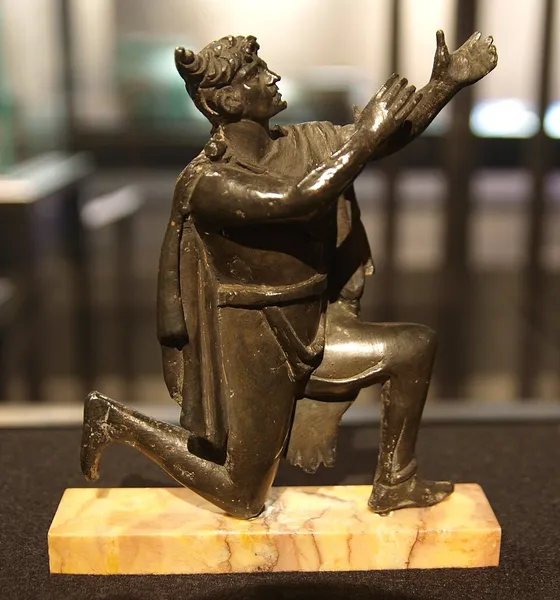
The Germanic peoples were tribal groups who lived in Northern Europe during Classical antiquity and the Early Middle Ages. In modern scholarship, they typically include the Roman-era Germani who lived in both Germania and parts of the Roman Empire, and all Germanic speaking peoples from this era, irrespective of where they lived, most notably the Goths. Another term, ancient Germans, is considered problematic by many scholars because it suggests identity with present-day Germans. Although the first Roman descriptions of Germani involved tribes west of the Rhine river, their homeland of Germania was portrayed as stretching east of the Rhine, to southern Scandinavia and the Vistula in the east, and to the upper Danube in the south. Other Germanic speakers, such as the Bastarnae and Goths, lived further east in what is now Moldova and Ukraine. The term Germani is generally only used to refer to historical peoples from the 1st to 4th centuries CE. Different academic disciplines have their own definitions of what makes someone or something "Germanic". Some scholars call for the term's total abandonment as a modern construct, since lumping "Germanic peoples" together implies a common group identity for which there is little evidence. Other scholars have defended the term's continued use and argue that a common Germanic language allows one to speak of "Germanic peoples", regardless of whether these ancient and medieval peoples saw themselves as having a common identity. Scholars generally agree that it is possible to refer to Germanic languages from about 500 BCE. Archaeologists usually associate the earliest clearly identifiable Germanic speaking peoples with the Jastorf culture of the Pre-Roman Iron Age in central and northern Germany and southern Denmark from the 6th to 1st centuries BCE. This culture existed around the same time that the First Germanic Consonant Shift is theorized to have occurred, leading to recognizably Germanic languages. Germanic language speakers expanded south, east, and west, coming into contact with Celtic, Iranic, Baltic, and Slavic peoples before they were noted by the Romans. Roman authors first described the Germani near the Rhine in the 1st century BCE, while the Roman Empire was establishing its dominance in that region.
Also on this shelf
German invasion of Greece.
Giants (Greek mythology).
See also
Uncatalogued shelfText from Wikipedia; plate via Wikimedia Commons. Text CC BY-SA 4.0; plate freely licensed (see Commons). Source record. Images and catalogue data are reproduced from open-access collections.