Arms and Armour
Castles and Town Walls of King Edward in Gwynedd
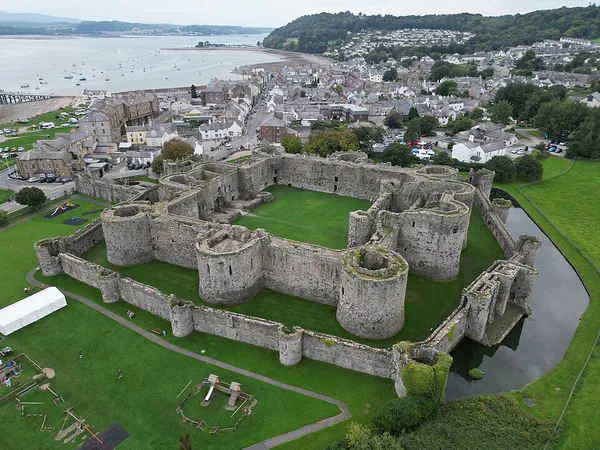
The Castles and Town Walls of King Edward in Gwynedd is a UNESCO-designated World Heritage Site located in North West Wales (specifically Gwynedd until 1996). It includes the castles of Beaumaris and Harlech and the castles and town walls of Caernarfon and Conwy. UNESCO considers the sites to be the "finest examples of late 13th century and early 14th century military architecture in Europe". The fortifications form part of the Ring of Iron built by Edward I after his invasion of North Wales in 1282. Edward defeated the local Welsh princes in a major campaign and set about permanently colonising the area. He created new fortified towns, protected by castles, in which English immigrants could settle and administer the territories. The project was hugely expensive and stretched royal resources to the limit. Fresh Welsh revolts followed in 1294 under the leadership of Madog ap Llywelyn. Conwy and Harlech were kept supplied by sea and held out against the attack, but Caernarfon, still only partially completed, was stormed. In the aftermath, Edward reinvigorated the building programme and ordered the commencement of work at Beaumaris. Edward's wars in Scotland began to consume royal funding, however, and work soon slowed once again. Building work on all the fortifications had ceased by 1330, without Caernarfon and Beaumaris having been fully completed. The fortifications played an important part in the conflicts in North Wales over the coming centuries. They were involved in the Welsh Revolt of the early 15th century and the Wars of the Roses in the late 15th century. Despite declining in military significance following the succession of the Tudor dynasty to the throne in 1485, they were pressed back into service during the English Civil War in the 17th century. In the aftermath of the conflict, Parliament ordered the slighting, or deliberate destruction, of parts of Conwy and Harlech, but the threat of a pro-Royalist invasion from Scotland ensured that Caernarfon and Beaumaris remained intact. By the end of the 17th century, however, the castles were ruinous. They became popular with visiting artists during the late 18th and early 19th centuries, and visitor numbers increased as access to the region improved during the Victorian era.
Also on this shelf
Enceinte.
Fritzlar.
See also
Uncatalogued shelfText from Wikipedia; plate via Wikimedia Commons. Text CC BY-SA 4.0; plate freely licensed (see Commons). Source record. Images and catalogue data are reproduced from open-access collections.