Arms and Armour
Fatimid army
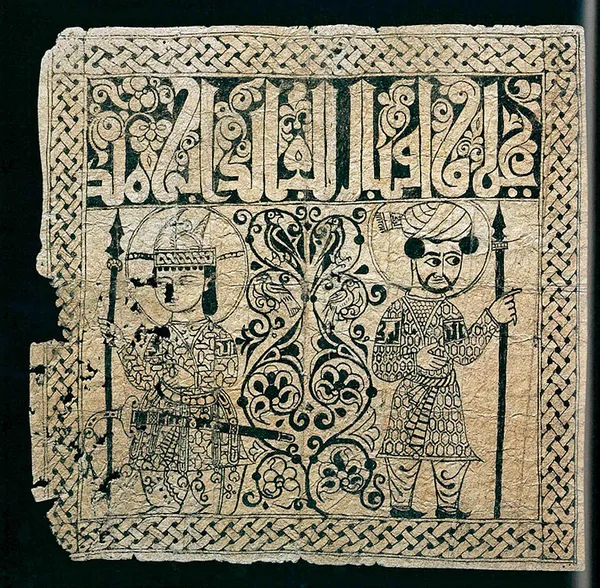
The Fatimid army was the land force of the Fatimid Empire (893–1171). Like the other armies of the medieval Islamic world, it was a multi-ethnic army. The core of the Fatimid army emerged from the Berber Kutama tribe, who had accepted the Isma'ili Dawah of Abu Abdallah al-Shi'i and overthrown the Aghlabids of Ifriqiya between 902 and 909. Very quickly the Kutama were supplemented with other ethnic contingents, such as the Rūm (Byzantine Greeks) and the Sudān (Black Africans), inherited from the Aghlabid military, but the Berbers remained the mainstay of Fatimid armies until the 970s, when the Fatimid conquest of Egypt and their subsequent expansion into Syria brought them into conflict with the Turkic ghulām cavalry of the eastern Islamic world. The Fatimids began to incorporate Turks and Daylamites in large numbers into their army, which led to—often bloody—rivalry with the Kutama. The Turks enjoyed an almost absolute ascendancy during the chaotic years 1062–1073, when the Fatimid regime almost collapsed during the Mustansirite Hardship. Their regime was ended by the Armenian Badr al-Jamali, who instituted a quasi-military dictatorship under the guise of an all-powerful vizierate, which effectively reduced the Fatimid caliphs to puppets. Under Badr and his successors, the Armenians rose to prominence in state and army, and during the final century of the Fatimid state it was them and the Sudān who provided the bulk of the Fatimid armies, until their power was broken by Saladin in the Battle of the Blacks in 1169. The fighting record of the Fatimid army was mixed. It began as a quasi-revolutionary force during its early decades, when it was marked by indiscipline and tribal rivalries, which resulted in the failure of the first attempts to conquer Egypt. As the Fatimid regime consolidated itself, however, the army's quality improved, and during the conflicts of the 950s in North Africa and against the Byzantine Empire in Sicily, it performed well. The conquest of Egypt in 969, a watershed moment in the Fatimid Caliphate's history, was a political rather than a military triumph, and the subsequent advance into the Levant brought the Fatimid military to face with enemies—the Turks, the Qarmatians, and the Byzantines—that it struggled to defeat.
Also on this shelf
Castle of Guimarães.
Capture of Regina Trench.
See also
Uncatalogued shelfText from Wikipedia; plate via Wikimedia Commons. Text CC BY-SA 4.0; plate freely licensed (see Commons). Source record. Images and catalogue data are reproduced from open-access collections.