Arms and Armour
Claim of William Clito
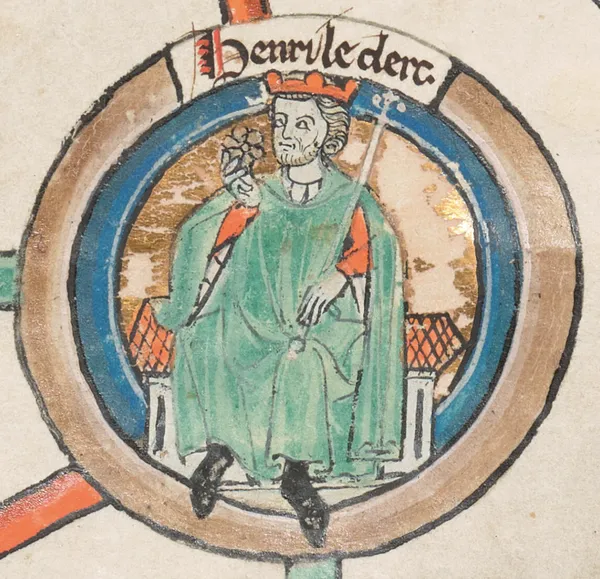
Claim of William Clito refers to the conflicts between Louis VI of France and Henry I of England over William Clito's claims to the Duchy of Normandy, the County of Flanders, and potentially to the throne of England. Although Henry did not recognise Clito's claims, Clito attracted support from Henry's dissidents, leading to recurring conflicts in Normandy, Flanders, and the Île-de-France from AD 1108 until his death in 1128. In 1106, Henry I of England conquered the Duchy of Normandy from his brother Robert Curthose, leaving Robert's son, William Clito, with a claim to the duchy. After ascending the throne, Louis VI began to assert his royal prerogative more forcefully. With regional allies, Louis and Henry first clashed between 1108 and 1113, culminating in Louis's reconciliation with Henry. In 1110, Clito, the son of Robert, escaped capture as Henry attempted to arrest him. A larger conflict broke out between 1116 and 1120 when Louis invaded Normandy alongside Baldwin of Flanders (d. 1119) and Fulk of Anjou, supporting Clito's claim to the duchy over that of Henry's son, William Adelin. Fulk made peace with Henry and wed his daughter Matilda of Anjou to Henry's son, Adelin. Louis and Clito were defeated at the Battle of Brémule in 1119 and the French king made peace with Henry in 1120, with Adelin swearing fealty for Normandy. Clito's claim to both Normandy and Flanders renewed viability when Adelin, the only legitimate son and heir of Henry, died in the White Ship disaster in November 1120, causing another phase of conflict. Fulk broke with Henry and wed Clito to his daughter Sibylla, but the marriage did not last as Henry convinced the papacy to issue an annulment in 1124. In 1127, Louis raised Clito to the countship after Charles the Good, Count of Flanders, was murdered. Despite early successes, Clito was abandoned by his supporters and threatened by Thierry of Alsace as a rival for the county. He ambushed and defeated Thierry at the Battle of Axspoele, but was mortally wounded while besieging Aalst, where Thierry had retreated, before he could capitalise on his success, dying in July 1128. Henry and Louis signed a peace treaty in 1129, and Thierry was recognised as the Count of Flanders. The fighting was tied to Louis's campaign to assert the authority of the French king and to his wars against rebellious barons such as Thomas of Marle.
Also on this shelf
Battle of Island Number Ten.
Carinthian Peasant Revolt.
See also
Uncatalogued shelfText from Wikipedia; plate via Wikimedia Commons. Text CC BY-SA 4.0; plate freely licensed (see Commons). Source record. Images and catalogue data are reproduced from open-access collections.