Arms and Armour
Erwin Rommel
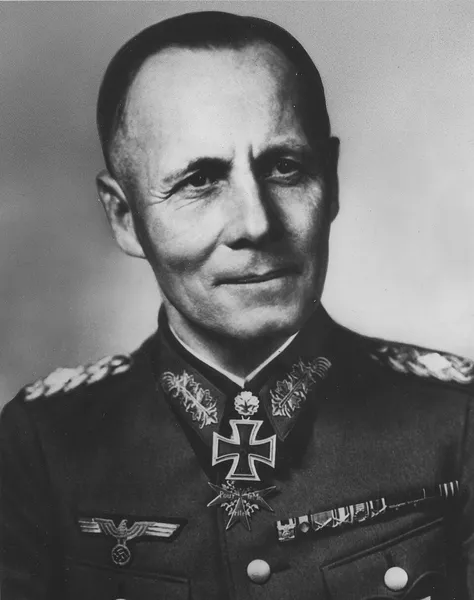
Johannes Erwin Eugen Rommel (pronounced [ˈɛɐviːn ˈʁɔməl] ; 15 November 1891 – 14 October 1944), known as The Desert Fox (German: Der Wüstenfuchs, pronounced [ˈvyːstn̩ˌfʊks] ), was a German Generalfeldmarschall (field marshal) during World War II. He served in the Wehrmacht of Nazi Germany, as well as in the Reichswehr of the Weimar Republic, and Imperial German Army of the German Empire. Rommel was a highly decorated officer in World War I and awarded the Pour le Mérite for his actions on the Italian Front. In 1937, he published his classic book on military tactics, Infantry Attacks, drawing on his experiences in that war. In World War II, he commanded the 7th Panzer Division during the 1940 invasion of France. His leadership of German and Italian forces in the North African campaign established his reputation as one of the ablest tank commanders of the war, and earned him the nickname der Wüstenfuchs, "the Desert Fox". Among his British adversaries he had a reputation for chivalry, and his phrase "war without hate" has been uncritically used to describe the North African campaign. Some historians have rejected the phrase as a myth, citing crimes against North African Jewish populations, while others note there is no clear evidence Rommel was involved in or aware of these crimes. He later commanded the German forces opposing the Allied cross-channel invasion of Normandy in June 1944. After the Nazis gained power, Rommel pledged allegiance to the new regime. However, historians have given different accounts of the specific period and his motivations. At least until near the war's end, he was a loyal supporter of Adolf Hitler, but not of the Nazi party and the SS. In 1944, Rommel was implicated in the 20 July plot (or Operation Valkyrie) to assassinate Hitler. Subsequently, Rommel was given a choice between suicide or facing a trial that would result in his disgrace and execution. He chose the former and took a cyanide pill. Rommel was given a state funeral, and it was announced he had succumbed to injuries from the strafing of his car in Normandy. Rommel became a larger-than-life figure in Allied and Nazi propaganda, and in postwar popular culture. Numerous authors portray him as an apolitical, brilliant commander and a victim of Nazi Germany, although others have contested this assessment and called it the "Rommel myth".
Also on this shelf
Europa Pass Batteries.
Fort Worden.
See also
Uncatalogued shelfText from Wikipedia; plate via Wikimedia Commons. Text CC BY-SA 4.0; plate freely licensed (see Commons). Source record. Images and catalogue data are reproduced from open-access collections.