Arms and Armour
Belarus
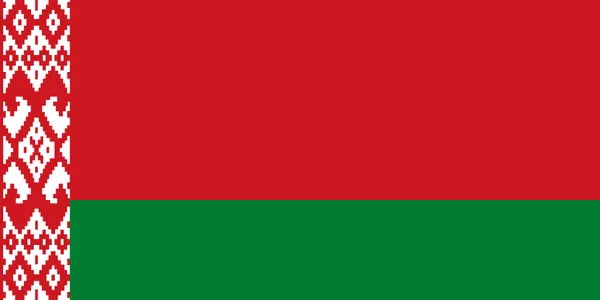
Belarus, officially the Republic of Belarus, is a landlocked country in Eastern Europe. It is bordered by Russia to the east and northeast, Ukraine to the south, Poland to the west, and Lithuania and Latvia to the northwest. Belarus spans an area of 207,600 square kilometres (80,200 sq mi) with a population of 9.1 million. The country has a hemiboreal climate and is administratively divided into six regions. Minsk is the capital and largest city; it is administered separately as a city with special status. For most of the medieval period, the lands of modern-day Belarus were ruled by independent city-states such as the Principality of Polotsk. Around 1300 these lands came fully under the Grand Duchy of Lithuania and subsequently by the Polish–Lithuanian Commonwealth; this period lasted for 500 years until the 1792–1795 partitions of Poland-Lithuania placed Belarus within the Russian Empire for the first time. In the aftermath of the Russian Revolution in 1917, different states arose competing for legitimacy amid the Civil War, ultimately ending in the rise of the Byelorussian SSR, which became a founding constituent republic of the Soviet Union in 1922. After the Polish-Soviet War (1918–1921), Belarus lost almost half of its territory to Poland. Much of the borders of Belarus took their modern shape in 1939, when some lands of the Second Polish Republic were reintegrated into it after the Soviet invasion of Poland, and were finalised after World War II. During World War II, military operations devastated Belarus, which lost about a quarter of its population and half of its economic resources. In 1945, the Byelorussian SSR became a founding member of the United Nations, along with the Soviet Union. The republic was home to a widespread and diverse anti-Nazi insurgent movement which dominated politics until well into the 1970s, overseeing Belarus's transformation from an agrarian to an industrial economy. The parliament of the republic proclaimed the sovereignty of Belarus on 27 July 1990, and during the dissolution of the Soviet Union, Belarus gained independence on 25 August 1991. Following the adoption of a new constitution in 1994, Alexander Lukashenko was elected Belarus's first president in the country's first and only free election after independence, serving as president ever since. Lukashenko heads a highly centralised authoritarian government.
Also on this shelf
Chronology of the Crusades, 1187–1291.
Expulsion of the Acadians.
See also
- ▸23rd (Northumbrian) Division
- ▸2015–16 Zika virus epidemic
- ▸21st Waffen Mountain Division of the SS Skanderbeg
Text from Wikipedia; plate via Wikimedia Commons. Text CC BY-SA 4.0; plate freely licensed (see Commons). Source record. Images and catalogue data are reproduced from open-access collections.