Architecture
Architecture of Poland
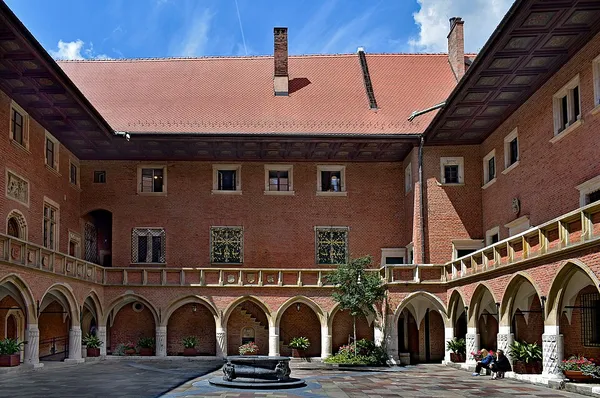
The architecture of Poland reflects the country’s political, religious, and cultural development since 966 AD, when the Polish state first emerged. The country's architectural heritage is defined by a broad sequence of major European styles, each leaving a clear imprint on the country’s cities and landscapes, and the architectural forms and styles greatly differ between the various regions of Poland. The Romanesque (10th and 11th century) and Gothic architecture (13th century) established Poland’s earliest monumental forms, in particular the Brick Gothic style which was utilised extensively in churches and castles during the Middle Ages and later in Gothic Revival. The Renaissance (early 16th century) introduced classical harmony and proportion, visible in planned urban layouts, arcaded courtyards, and façades with decorated attics above the cornice, which is the most recognisable feature of the Polish Renaissance. Notably, Mannerism and Northern Mannerism left a considerable legacy in built heritage across the country. Baroque architecture then became dominant (late 16th century), characterised by stucco decoration, ornamented interiors and palace complexes. Following the Partitions of Poland, under foreign rule, the late 18th and 19th century brought Neoclassicism, Eclecticism and industrial architecture. In the 20th century, Poland’s architecture was shaped by modernism (functionalism), socialist realism, and extensive post-World War II reconstruction of major cities, especially Warsaw and Gdańsk. Modernist housing estates and public buildings became widespread between 1920 and 1939, while socialist realist projects emphasized monumental scale and ideological symbolism from 1949 until the mid-1950s. Between 1960 and 1989, prefabricated functionalist housing estates were the dominant form of architectural expression in which the form follows function. After 1989, largely controversial postmodernism became widespread before being succeeded by contemporary architecture in more recent years. At present, Poland leads in the adaptive reuse of industrial sites and in the revitalisation of its built heritage. Several important works of Western architecture, such as the Wawel Hill, the Książ and Malbork castles, cityscapes of Toruń, Zamość, and Kraków are located in the country. Some of them are UNESCO World Heritage Sites.
Also on this shelf
Francisco Franco.
Cathedral of the Holy Trinity, Blaj.
See also
Uncatalogued shelfText from Wikipedia; plate via Wikimedia Commons. Text CC BY-SA 4.0; plate freely licensed (see Commons). Source record. Images and catalogue data are reproduced from open-access collections.