Architecture
Architecture of Finland
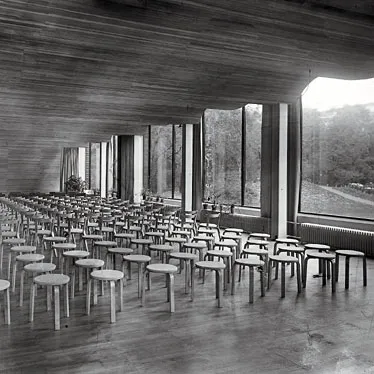
The architecture of Finland has a history spanning over 800 years, and while up until the modern era the architecture was highly influenced by Sweden, there were also influences from Germany and Russia. From the early 19th century onwards influences came directly from further afield: first when itinerant foreign architects took up positions in the country and then when the Finnish architect profession became established. Furthermore, Finnish architecture in turn has contributed significantly to several styles internationally, such as Jugendstil (or Art Nouveau), Nordic Classicism and Functionalism. In particular, the works of the country's most noted early modernist architect Eliel Saarinen have had significant worldwide influence. Even more renowned than Saarinen has been modernist architect Alvar Aalto, who is regarded as one of the major figures in the world history of modern architecture. In an article from 1922 titled "Motifs from past ages", Aalto discussed national and international influences in Finland, and as he saw it: Seeing how people in the past were able to be international and unprejudiced and yet remain true to themselves, we may accept impulses from old Italy, from Spain, and from the new America with open eyes. Our Finnish forefathers are still our masters. In a 2000 review article of twentieth century Finnish architecture, Frédéric Edelmann, arts critic of the French newspaper Le Monde, suggested that Finland has more great architects of the status of Alvar Aalto in proportion to the population than any other country in the world. Finland's most significant architectural achievements are related to modern architecture, mostly because the current building stock has less than 20% that dates back to before 1955, which relates significantly to the reconstruction following World War II and the process of urbanisation which only gathered pace after the war. 1249 is the date normally given for the beginning of Swedish rule over the land now known as Finland (in Finnish, Suomi), and this rule continued until 1809, after which the Grand Duchy of Finland was established within the Russian Empire. Finland declared its full independence in 1917, during the Russian Revolution.
Also on this shelf
Cathedral of the Sacred Heart (Richmond, Virginia).
Church of San Cataldo.
See also
Uncatalogued shelfText from Wikipedia; plate via Wikimedia Commons. Text CC BY-SA 4.0; plate freely licensed (see Commons). Source record. Images and catalogue data are reproduced from open-access collections.