Architecture
Bydgoszcz Architects (1850–1970s)
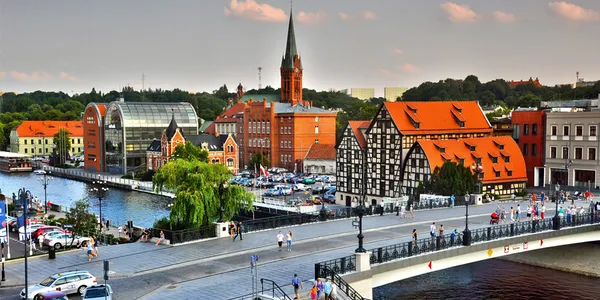
Bydgoszcz displays an abundant variety of architectures, with styles from neo-gothic, neo-baroque and neoclassicism, to Art Nouveau and modernism; hence its nickname of Little Berlin at the start of the 20th century. The notable granaries on Mill Island and along Brda river also recall a recognized timber-framed characteristics of the city in Poland. The period stretching from 1850 to the Second Polish Republic witnessed the greatest development of the city. In the mid-19th century, the arrival of the Prussian Eastern Railway (German: Preußische Ostbahn) contributed greatly to the development of Bromberg. After WWI, with the re-attachment of the town to the new state of Poland, Bydgoszcz underwent anew a growth, while German residents fled. Most of the constructions of these time, still preserved today, are linked to a number of architects who left (for a few of them) a profound mark on the current architectural landscape of the city.
Also on this shelf
Alison and Peter Smithson.
Christ Falling on the Way to Calvary.
See also
Uncatalogued shelfText from Wikipedia; plate via Wikimedia Commons. Text CC BY-SA 4.0; plate freely licensed (see Commons). Source record. Images and catalogue data are reproduced from open-access collections.