Architecture
Angers
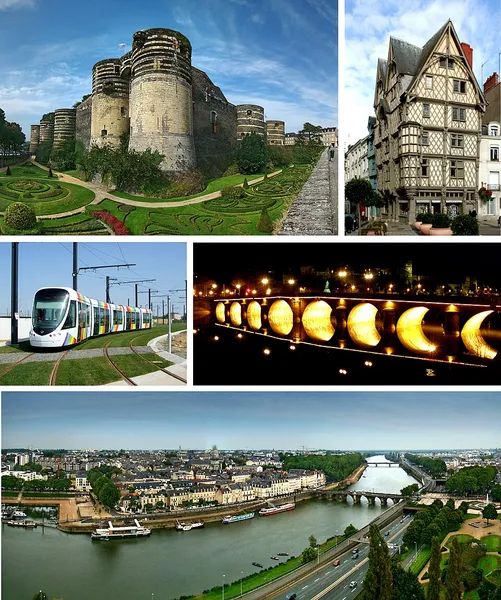
Angers (UK: , US: ; French: [ɑ̃ʒe] ) is a city in western France, about 300 km (190 mi) southwest of Paris. It is the prefecture of the Maine-et-Loire department and was the capital of the province of Anjou until the French Revolution. The inhabitants of both the city and the province are called Angevins or, more rarely, Angeriens. Angers proper covers 42.70 square kilometres (16.49 sq mi) and has a population of 157,555 inhabitants, while around 443,900 live in its metropolitan area (aire d'attraction). The Angers Loire Métropole is made up of 29 communes covering 667 square kilometres (258 sq mi) with 308,800 inhabitants (2022). Not including the broader metropolitan area, Angers is the third most populous commune in northwestern France after Nantes and Rennes and the 18th most populous commune in France. For centuries, Angers was an important stronghold in northwestern France. It was the cradle of the Plantagenet dynasty and became one of the intellectual centers of Europe during the reign of René of Anjou. Angers developed at the confluence of three rivers, the Mayenne, the Sarthe, and the Loir, all coming from the north and flowing south towards the Loire. Their confluence, just north of Angers, creates the Maine, a short but wide river that flows into the Loire several kilometres south. Today, Angers stands out for its specialization in the plant sector: Végépolys is Europe's leading horticultural competitiveness cluster, and the city is also home to the headquarters of the Community Plant Variety Office. In addition, the Angers metropolitan area is a major economic centre in western France, particularly active in industry and tourism. Angers enjoys a rich cultural life, made possible by its universities and museums. The old medieval center is still dominated by the massive château of the Plantagenêts, home of the Apocalypse Tapestry, the biggest medieval tapestry ensemble in the world. Angers is also both at the edge of the Val de Loire, a World Heritage Site, and the Loire-Anjou-Touraine regional natural park.
Also on this shelf
German occupation of Rome.
Carlo Caliari.
See also
Uncatalogued shelfText from Wikipedia; plate via Wikimedia Commons. Text CC BY-SA 4.0; plate freely licensed (see Commons). Source record. Images and catalogue data are reproduced from open-access collections.