Architecture
Architecture of the Philippines
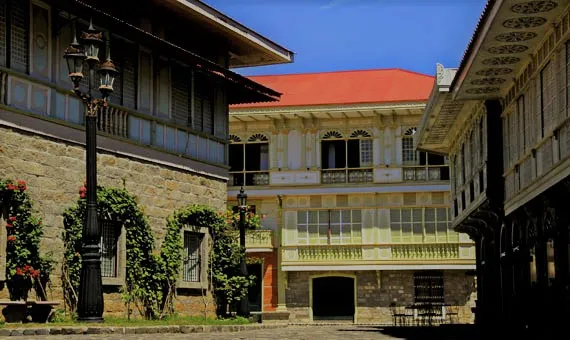
The architecture of the Philippines reflects the historical and cultural traditions in the country. Most prominent historic structures in the archipelago are influenced by Austronesian, Spanish, Chinese, and American architectures. During three hundred thirty years of Spanish colonization, the Philippine architecture was dominated by the Spanish influences. The Augustinian friars, along with other religious orders, built many grand churches and cathedrals all over the Philippine Islands. During this period the traditional Filipino Bahay na bató (Filipino for "house of stone") style for the large houses emerged. These were large houses built of stone and wood combining Filipino, Spanish and Chinese style elements. After the Philippines was ceded to the United States as a consequence of the Spanish–American War in 1898, the architecture of the Philippines was influenced by American aesthetics. In this period, the plan for the modern City of Manila was designed, with many neoclassical architecture and art deco buildings by famous American and Filipino architects. During World War II, large portions of Intramuros and Manila were destroyed; many heritage districts in the provinces were burned down by the Japanese before the end of the war. In the reconstruction period after the Second World War, many of the destroyed buildings were rebuilt, however, a majority of heritage structures, especially in the provinces, were lost and never rebuilt. Most of the structures that were lost are considered focal properties of former heritage towns. In the late 20th century, modern architecture with straight lines and functional aspects was introduced, particularly in the Brutalist architecture that characterized government-built structures done in the Marcos period. During this period many of the older structures fell into decay due to the imposition of martial law. After the return of democracy in 1986, a new age of Philippine architecture came into focus through modernism.
Also on this shelf
Frigiliana.
Badisches Landesmuseum.
See also
Uncatalogued shelfText from Wikipedia; plate via Wikimedia Commons. Text CC BY-SA 4.0; plate freely licensed (see Commons). Source record. Images and catalogue data are reproduced from open-access collections.