Architecture
Architecture of London
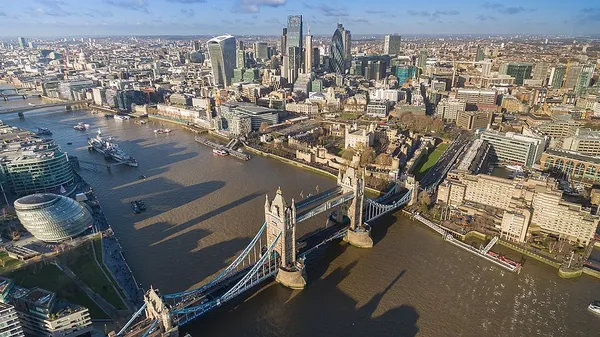
London's architectural heritage consists of buildings from a very wide variety of styles and historical periods, with no one of these being dominant. London's distinctive architectural eclecticism stems from its long history, continual redevelopment, destruction by the Great Fire of London and the Blitz, and state recognition of private property rights which have limited large-scale state planning. This sets London apart from other European capitals such as Paris and Rome which are more architecturally homogeneous as a result of being largely rebuilt in neoclassical styles during the 16th-19th centuries. London's diverse architecture ranges from the Romanesque central keep of the Tower of London, the great Gothic church of Westminster Abbey, the Palladian royal residence Queen's House, Christopher Wren's Baroque masterpiece St Paul's Cathedral, the High Victorian Gothic of the Palace of Westminster, the industrial Art Deco of Battersea Power Station, the post-war Modernism of the Barbican Estate and the Postmodern skyscraper 30 St Mary Axe, also known as "the Gherkin". After the Roman withdrawal from Britain in the 5th century AD, the layout of the Roman settlement governed the plan of the Saxon and medieval city. This core of London is known as the City of London, while Westminster, the ancient centre of political power, lies to the west. Relatively few medieval structures survive due to the city's near-total destruction in the Great Fire of London in 1666, with exceptions such as the Tower of London, Westminster Abbey, Westminster Hall, Guildhall, St James's Palace, Lambeth Palace and some Tudor buildings. After the Great Fire, London was rebuilt and greatly modernised under the direction of the baroque architect Sir Christopher Wren, with the new St Paul's Cathedral as its centrepiece. After a period of dramatic expansion in the 18th and 19th centuries, London reached its zenith as the world's largest and populous city from 1831 to 1925, becoming the capital of the British Empire at its greatest extent and power. In this period London sprawled vastly beyond its historical boundaries, absorbing many formerly rural settlements and creating vast suburbs.
Also on this shelf
Cardinal Knox Centre.
Cymbalista Synagogue and Jewish Heritage Center.
See also
Uncatalogued shelfText from Wikipedia; plate via Wikimedia Commons. Text CC BY-SA 4.0; plate freely licensed (see Commons). Source record. Images and catalogue data are reproduced from open-access collections.