Architecture
Grade II* listed buildings in Brighton and Hove
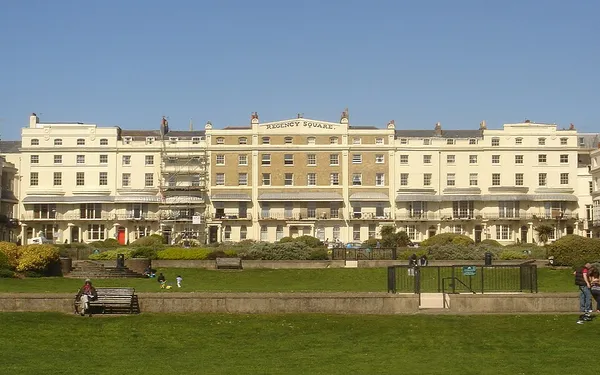
There are 72 Grade II* listed buildings in the city of Brighton and Hove, England. The city, on the English Channel coast approximately 52 miles (84 km) south of London, was formed as a unitary authority in 1997 by the merger of the neighbouring towns of Brighton and Hove. Queen Elizabeth II granted city status in 2000. In England, a building or structure is defined as "listed" when it is placed on a statutory register of buildings of "special architectural or historic interest" by the Secretary of State for Culture, Media and Sport, a Government department, in accordance with the Planning (Listed Buildings and Conservation Areas) Act 1990. English Heritage, a non-departmental public body, acts as an agency of this department to administer the process and advise the department on relevant issues. There are three grades of listing status. Grade I, the highest, is defined as being of "exceptional interest"; Grade II* is used for "particularly important buildings of more than special interest"; and Grade II, the lowest, is used for buildings of "special interest". Brighton was founded on top of the sea-facing cliffs where the South Downs meet the English Channel. A series of valleys allowed transport routes to develop towards Lewes, London and other important settlements. Although Neolithic settlement has been confirmed, the Anglo-Saxons were the first permanent settlers; the population was about 400 by the time of the Domesday survey in 1086. Its neighbour Hove, on flatter, more fertile land to the west, developed concurrently but independently: its existence was recorded in 1288, and two separate prebends (similar to benefices) existed by 1291. Fishing, farming and smuggling drove the economy, but decline set in during the Middle Ages and persisted until the 19th century. Coastal flooding destroyed buildings on many occasions, the parish church fell into ruins, and the population—almost all poor—numbered about 100 in 1801. Brighton became fashionable as a holiday destination and health resort in the mid-18th century, and royal patronage (particularly by the flamboyant Prince Regent) increased its popularity with high society and the upper classes. Day-trippers and longer-term visitors from other social classes soon followed, and by the early 19th century the town was Britain's foremost seaside resort.
Also on this shelf
Broughton Castle.
Church of Santa Maria dell'Ammiraglio.
See also
Uncatalogued shelfText from Wikipedia; plate via Wikimedia Commons. Text CC BY-SA 4.0; plate freely licensed (see Commons). Source record. Images and catalogue data are reproduced from open-access collections.