Architecture
Gothic secular and domestic architecture
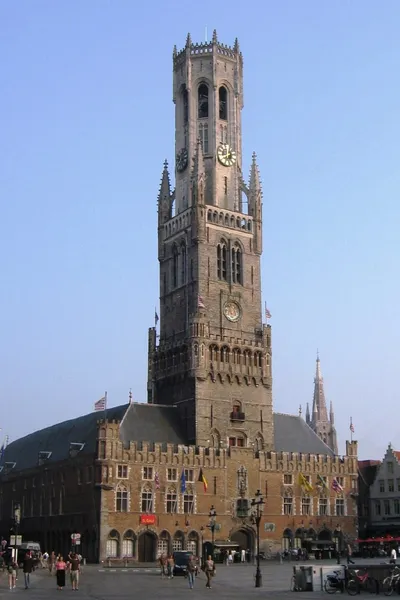
Gothic architecture is a style of architecture that flourished in Europe during the high and late medieval period. It evolved from Romanesque architecture and was succeeded by Renaissance architecture. Originating in 12th-century France and lasting into the 16th century, Gothic architecture is most familiar as the architecture of many of the great cathedrals, abbeys and churches of Europe. It is also the architecture of many non-religious buildings, such as castles, palaces, town halls, guildhalls, universities and to a less prominent extent, private dwellings. Although secular and civic architecture in general was subordinate in importance to ecclesiastical architecture, civic architecture grew in importance as the Middle Ages progressed. David Watkin, for example writes about secular Gothic architecture in present-day Belgium: "However, it is the secular architecture, the guild-halls and town halls of her prosperous commercial cities, which make Belgium unique. Their splendour often exceeds that of contemporary ecclesiastical foundations, while their decorative language was not without influence on churches such as Antwerp Cathedral." Another exception was Venetian Gothic architecture, which is at its most distinctive in the many surviving palace facades.
Also on this shelf
Church of St. Peter and St. Paul, Varniai.
Architecture of Atlanta.
See also
Uncatalogued shelfText from Wikipedia; plate via Wikimedia Commons. Text CC BY-SA 4.0; plate freely licensed (see Commons). Source record. Images and catalogue data are reproduced from open-access collections.