Architecture
Buildings and architecture of Brighton and Hove
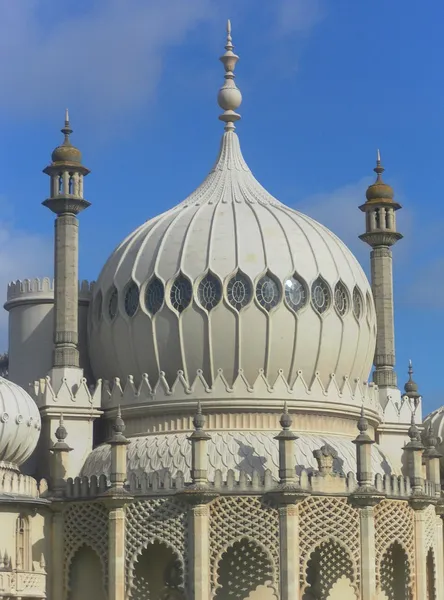
Brighton and Hove, a city on the south-east coast of England, has a large and diverse stock of buildings "unrivalled architecturally" among the country's seaside resorts. The urban area is made up of the formerly separate towns of Brighton and Hove, nearby villages such as Portslade, Patcham and Rottingdean, and 20th-century estates such as Moulsecoomb and Mile Oak. As of 2013, the conurbation had a population of about 253,000. About half of the 20,430-acre (8,270 ha) geographical area is classed as built up. Brighton's transformation from medieval fishing village into spa town and pleasure resort, patronised by royalty and fashionable high society, coincided with the development of Regency architecture and the careers of three architects whose work came to characterise the 4-mile (6.4 km) seafront. The previously separate village of Hove developed as a comfortable middle-class residential area "under a heavy veneer of [Victorian] suburban respectability": large houses spread rapidly across the surrounding fields during the late 19th century, although the high-class and successful Brunswick estate was a product of the Regency era. Old villages such as Portslade, Rottingdean, Ovingdean and Patcham, with ancient churches, farms and small flint cottages, became suburbanised as the two towns grew and merged, and the creation of "Greater Brighton" in 1928 brought into the urban area swathes of open land which were then used for housing and industrial estates. Many buildings were lost in the 1960s and 1970s, when Brighton's increasing regional importance encouraged redevelopment, but conservation movements were influential in saving other buildings. Much of the city's built environment is composed of buildings of the Regency, Victorian and Edwardian eras. The Regency style, typical of the late 18th and early 19th centuries, is characterised by pale stuccoed exteriors with Classical-style mouldings and bay windows. Even the modest two-storey terraced houses which spread rapidly across the steeply sloping landscape in the mid-19th century display some elements of this style. Extensive suburban development in Hove and the north of Brighton in the late 19th and early 20th century displays architectural features characteristic of those eras, with an emphasis on decorative brickwork and gables.
Also on this shelf
Francesco Hayez.
Cathedral Basilica of the Immaculate Conception (Denver).
See also
Uncatalogued shelfText from Wikipedia; plate via Wikimedia Commons. Text CC BY-SA 4.0; plate freely licensed (see Commons). Source record. Images and catalogue data are reproduced from open-access collections.