Architecture
Late Middle Ages
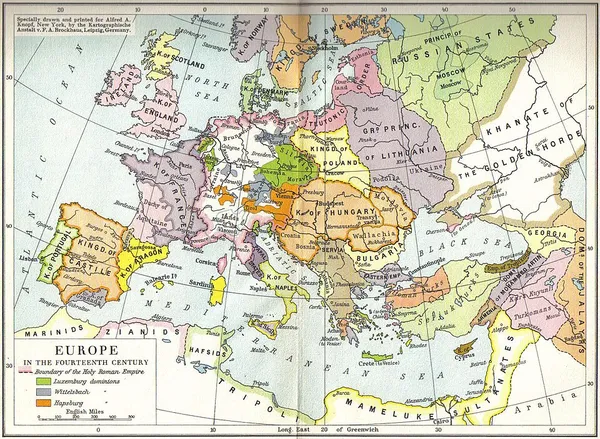
The late Middle Ages or late medieval period was the period of European history lasting from 1300 to 1500 AD. The late Middle Ages followed the High Middle Ages and preceded Early modern Europe (and in much of Europe, the Renaissance). Around 1350, centuries of prosperity and growth in Europe came to a halt. A series of famines and plagues, including the Great Famine of 1315–1317 and the Black Death, reduced the population to around half of what it had been before the calamities. Along with depopulation came social unrest and endemic warfare. France and England experienced serious peasant uprisings, such as the Jacquerie and the Peasants' Revolt, as well as over a century of intermittent conflict, the Hundred Years' War. To add to the many problems of the period, the unity of the Catholic Church was temporarily shattered by the Western Schism. Collectively, those events are sometimes called the crisis of the late Middle Ages. Despite the crises, the 14th century was also a time of great progress in the arts and sciences. Following a renewed interest in ancient Greek and Roman texts that took root in the High Middle Ages, the Italian Renaissance began. The absorption of Latin texts had started before the Renaissance of the 12th century through contact with Arabs during the Crusades, but the availability of important Greek texts accelerated with the fall of Constantinople to the Ottoman Turks, when many Byzantine scholars had to seek refuge in the West, particularly Italy. Combined with this influx of classical ideas was the invention and rapid spread of printing, which facilitated the dissemination of the printed word and democratized learning. These two developments would later contribute to the Reformation. Toward the end of the period, the Age of Discovery began. The expansion of the Ottoman Empire cut off trading possibilities with the East. Europeans were forced to seek new trading routes, leading to the Spanish expedition under Christopher Columbus to the Americas in 1492 and Vasco da Gama's voyage to Africa and India in 1498. Their discoveries strengthened the economy and power of European nations. The changes brought about by these developments have led many scholars to view this period as the end of the Middle Ages and the beginning of modern history and of early modern Europe.
Also on this shelf
History of architecture and art in Milan.
Chadderton.
See also
Uncatalogued shelfText from Wikipedia; plate via Wikimedia Commons. Text CC BY-SA 4.0; plate freely licensed (see Commons). Source record. Images and catalogue data are reproduced from open-access collections.