Architecture
Estate houses in Scotland
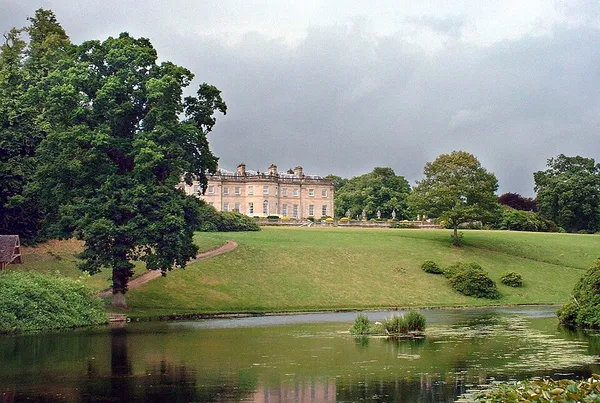
Estate houses in Scotland (or Scottish country houses) are large houses usually on landed estates in Scotland. They were built from the sixteenth century, after defensive castles began to be replaced by more comfortable residences for royalty, nobility and local lairds. The origins of Scottish estate houses are in aristocratic emulation of the extensive building and rebuilding of royal residences, beginning with Linlithgow, under the influence of Renaissance architecture. In the 1560s the unique Scottish style of the Scots baronial emerged, which combined features from medieval castles, tower houses, and peel towers with Renaissance plans, in houses designed primarily for residence rather than defence. After the Scottish Restoration in 1660, the work of the architect Sir William Bruce introduced to Scotland a new phase of classicising architecture, in the shape of royal palaces and estate houses incorporating elements of the Palladian style. In the eighteenth century Scotland produced some of the most important British architects, including the neo-Palladian William Adam and his son Robert Adam, who rejected the Palladian style and were two of the European initiators of neoclassical architecture, embodied in a series of estate houses in Scotland and England. The incorporation of "Gothick" elements of medieval architecture by William Adam helped to launch a revival of the Scots baronial in the nineteenth century, given popularity by its use at Sir Walter Scott's Abbotsford House and Queen Victoria's retreat at Balmoral Castle. In the twentieth century the building of estate houses declined as the influence of the aristocracy waned, and many were taken over by the National Trust for Scotland and Historic Scotland. After the Reformation, and the departure of the Scottish court in 1603, artists and artisans looked to secular patronage and estate houses became repositories of art and of elaborate furnishings. Estate houses were adorned with paintings, wood carvings and plasterwork. The Grand Tour encouraged the collection of classical art and the adoption of classical styles for new works that were incorporated into the Adam Style. The Baronial revival resulted a synthesised Victorian style that combined elements of the Renaissance, symbols of landed power and national affiliation with modern fittings.
Also on this shelf
Farouk of Egypt.
Elias of Dereham.
See also
Uncatalogued shelfText from Wikipedia; plate via Wikimedia Commons. Text CC BY-SA 4.0; plate freely licensed (see Commons). Source record. Images and catalogue data are reproduced from open-access collections.