Architecture
Culture of ancient Rome
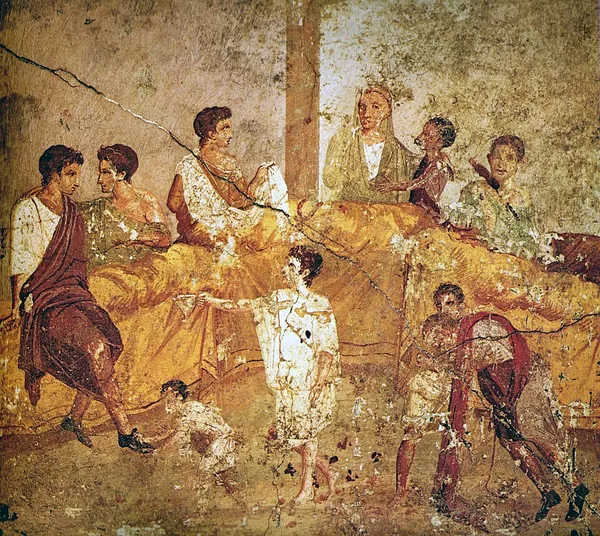
The culture of ancient Rome existed throughout the almost 1,200-year history of Ancient Rome. The term refers to the culture of the Roman Republic, later the Roman Empire, which at its peak covered an area from present-day Lowland Scotland and Morocco to the Euphrates. Life in ancient Rome revolved around the city of Rome and its monumental architecture such as the Colosseum, Trajan's Forum, and the Pantheon. The city also had several theaters and gymnasia, along with many taverns, baths and brothels. Throughout the territory under ancient Rome's control, residential architecture ranged from very modest houses to country villas, and in the capital city of Rome, there were imperial residences on the elegant Palatine Hill. The vast majority of Rome's population lived in the city center, packed into Insulae (apartment blocks). The city of Rome was the largest megalopolis of that time, with a population that may well have exceeded one million people. A substantial proportion of the population under the city's jurisdiction lived in innumerable urban centers, with population of at least 10,000 and several military settlements, a very high rate of urbanization for its time. The most urbanized part of the Empire was Italy, which had an estimated rate of urbanization of 32%. Most Roman towns and cities had a forum, temples and the same type of buildings, on a smaller scale, similar to Rome. The large urban population required a huge supply of food, which was a complex logistical task, including acquiring, transporting, storing and distribution of food for Rome and other urban centers. Italian farms supplied vegetables and fruits, but fish and meat were luxuries. Aqueducts were built to bring water to urban centers and wine and oil were imported from Hispania, Gaul and Africa. There was also a very large amount of commerce between the provinces of the Roman Empire, since its roads and transportation technology were very efficient. The majority of the population under the jurisdiction of ancient Rome lived in the countryside in settlements with less than 10,000 inhabitants. Landlords generally resided in cities and their estates were left in the care of farm managers. The plight of rural slaves was generally worse than their counterparts working in urban aristocratic households.
Also on this shelf
ASEAN Headquarters.
Black-and-white Revival architecture.
See also
Uncatalogued shelfText from Wikipedia; plate via Wikimedia Commons. Text CC BY-SA 4.0; plate freely licensed (see Commons). Source record. Images and catalogue data are reproduced from open-access collections.