Architecture
Cuba
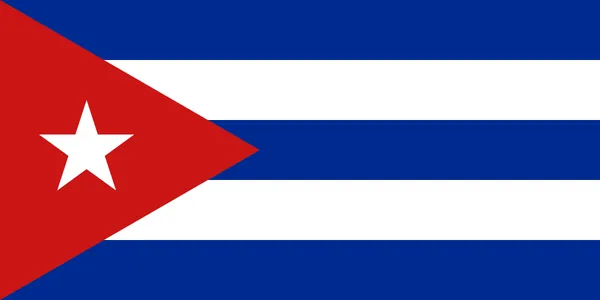
Cuba, officially the Republic of Cuba, is an island country in the Caribbean. It comprises the eponymous main island as well as 4,195 islands, islets, and cays. Situated at the convergence of the Caribbean Sea, Gulf of Mexico, and Atlantic Ocean, Cuba is located east of the Yucatán Peninsula, south of both Florida and the Bahamas, west of Hispaniola, and north of Jamaica and the Cayman Islands. Cuba is the largest country in the Caribbean by area and the third-largest by population, after Haiti and the Dominican Republic. Culturally, Cuba is considered to be part of Latin America. Its capital and largest city is Havana. Cuba was inhabited as early as the 4th millennium BC, with the Guanahatabey and Taíno peoples present at the time of Spanish colonization in the 15th century. Cuba's population descends primarily from three groups: pre-Columbian indigenous peoples, chiefly the Taíno and Ciboney, Spanish settlers and immigrants (mainly from Andalusia, the Canary Islands, Galicia, and Asturias), and sub-Saharan Africans brought through the transatlantic slave trade. The territory remained part of the Spanish Empire until the Spanish–American War of 1898, after which it was occupied by the United States and gained independence in 1902. A 1933 coup toppled the democratically elected government of Carlos Manuel de Céspedes y Quesada and began a long period of military influence, particularly by Fulgencio Batista. In 1940, Cuba implemented a new constitution, but mounting political unrest culminated in the 1952 Cuban coup d'état. Batista's autocratic government was eventually overthrown in January 1959 by the 26th of July Movement, during the Cuban Revolution. The revolution established a communist government under Fidel Castro that remains to this day. Castro's government became a major point of contention between the Soviet Union and the United States during the Cold War; the 1962 Cuban Missile Crisis is widely considered to be the closest the world has come to a nuclear war. During the 1970s through the late 1980s, Cuba intervened in numerous conflicts in support of anti-colonial and Marxist governments or movements across Africa, Latin America, and the Middle East. According to a CIA declassified report, Cuba had received $33 billion in Soviet aid by 1984.
Also on this shelf
Calapan Cathedral.
Alessandro de' Medici, Duke of Florence.
See also
- ▸Cathedral Parish School
- ▸Corvus (constellation)
- ▸Cathedral of the Assumption of the Blessed Virgin Mary, Tuam
Text from Wikipedia; plate via Wikimedia Commons. Text CC BY-SA 4.0; plate freely licensed (see Commons). Source record. Images and catalogue data are reproduced from open-access collections.