Architecture
History of Italy
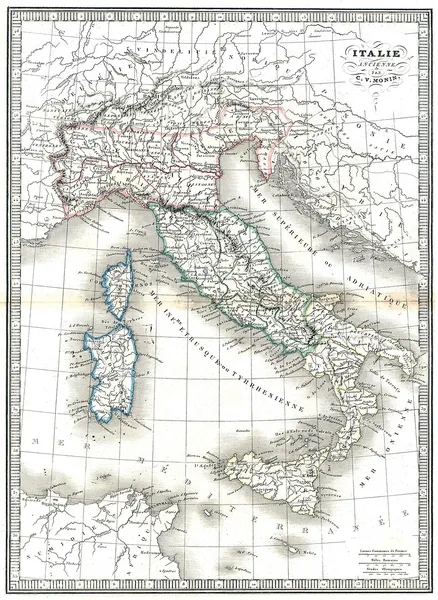
Italy has been inhabited by humans since the Paleolithic. During antiquity, there were many peoples in the Italian peninsula, including Etruscans, Latins, Samnites, Umbri, Cisalpine Gauls, Greeks in Magna Graecia and others. Most significantly, Italy was the cradle of the Roman civilization. Rome was founded as a kingdom in 753 BC and became a republic in 509 BC. The Roman Republic then unified Italy forming a confederation of the Italic peoples and rose to dominate Western Europe, Northern Africa, and the Near East. The Roman Empire, established in 27 BC, ruled the Mediterranean region for centuries, contributing to the development of Western culture, philosophy, science and art. During the early Middle Ages, Italy experienced the succession in power of Ostrogoths, Byzantines, Longobards and the Holy Roman Empire and fragmented into numerous city-states and regional polities, a situation that would remain until the unification of the country. These polities and the maritime republics, in particular Venice and Genoa, rose to prosperity. Eventually, the Italian Renaissance emerged and spread to the rest of Europe, bringing a renewed interest in humanism, science, exploration, and art with the start of the modern era. In the medieval and early modern era, Southern Italy was ruled by the Norman, Swabian and Angevin dynasties and the Aragonese, French and Spanish crowns. Central Italy was largely part of the Papal States. In the 19th century, Italian unification led to the establishment of an Italian nation-state under the House of Savoy. The new Kingdom of Italy quickly modernized and built a colonial empire, controlling parts of Africa and countries along the Mediterranean. At the same time, Southern Italy remained rural and poor, originating the Italian diaspora. Victorious in World War I, Italy completed the unification by acquiring Trento and Trieste and gained a permanent seat in the League of Nations's executive council. The partial infringement of the Treaty of London (1915) led to the sentiment of a mutilated victory among radical nationalists, contributing to the rise of the fascist dictatorship of Benito Mussolini in 1922.
Also on this shelf
Cathedral of Saint Archangel Michael, Belgrade.
Gaiety Theatre, Isle of Man.
See also
Uncatalogued shelfText from Wikipedia; plate via Wikimedia Commons. Text CC BY-SA 4.0; plate freely licensed (see Commons). Source record. Images and catalogue data are reproduced from open-access collections.