Architecture
Caterina Sforza
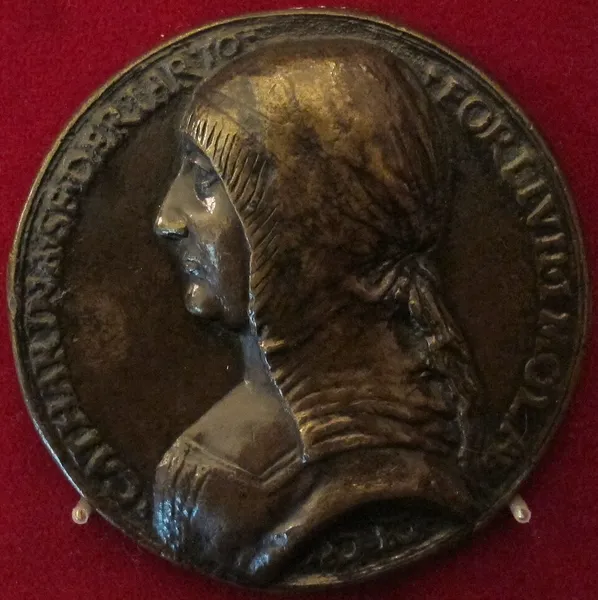
Caterina Sforza (1463 – 28 May 1509) was an Italian noblewoman who ruled as Countess of Forlì and Lady of Imola, initially alongside her husband Girolamo Riario, and later as regent for their son, Ottaviano Riario. She is mentioned in the Florentine Histories written by her contemporary Italian diplomat and political theorist Niccolo Machiavelli. A descendant of a dynasty of prominent condottieri, Caterina Sforza distinguished herself from an early age through bold and impetuous actions aimed at safeguarding her possessions from usurpers and defending her dominions amid political intrigues. Her fearless and assertive character earned her the nickname La Tigre ("The Tiger"). In her private life, Caterina was devoted to various activities, including experiments in alchemy and a love of hunting, dancing, and horse riding. She was educated and engaged in religious rituals and matters, commissioned works of art, stood as a fashion icon, and was a collector of many jewels and clothing. In addition, she undertook urban, residential, and military architectural projects. She had many children, but only the youngest, Giovanni delle Bande Nere, inherited his mother's forceful, militant personality. Caterina's resistance to Cesare Borgia meant she had to face his fury and imprisonment. After she gained her freedom in Rome, she then went on to lead a quiet life in Florence. In the final years of her life, she confided to a monk: "Se io potessi scrivere tutto, farei stupire il mondo" ("If I could write everything that happened, I would shock the world").
Also on this shelf
Capture of Rome.
Giovanni Francesco Caroto.
See also
Uncatalogued shelfText from Wikipedia; plate via Wikimedia Commons. Text CC BY-SA 4.0; plate freely licensed (see Commons). Source record. Images and catalogue data are reproduced from open-access collections.