Architecture
Bandung
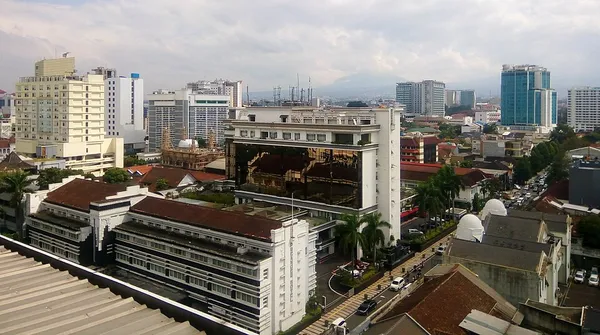
Bandung is the capital city of the West Java province of Indonesia. Located on the western highland of Java island, it has one of the coolest climates compared to other provincial capitals in Indonesia, situated 708 meters (2,323 feet) above sea level (the highest point being at an altitude of 892 meters (2,927 feet) in the north, and the lowest at 666 meters (2,185 feet) in the south), approximately 145 kilometres (90 miles) southeast of Jakarta. Bandung lies in a river basin surrounded by volcanic mountains that provide a natural defense system, which was the primary reason for the Dutch East Indies government's plan to move the capital from Batavia (modern-day Jakarta) to Bandung. The Dutch first established tea plantations around the mountains in the 18th century. In the early 19th century, a road was constructed to connect the plantation area with Batavia the colonial capital located 180 kilometers (112 miles) to the northwest and to serve as a transport route for the island of Java's defense network. In the early 20th century, the Dutch population in Bandung demanded the establishment of a municipal government (gemeente) a request granted in 1906 and the city subsequently developed into an exclusive resort area for Europeans, complete with hotels, cafés, and shops. Braga Street evolved into an elite district lined with cafés, restaurants, and boutiques; the abundance of shops selling fashion items from Paris earned the city the nickname Parijs van Java (Dutch: "The Paris of Java"). After Indonesia declared independence in 1945, the city experienced ongoing development and urbanization, transforming from an idyllic town into a dense 16,500 people/km2 (per square kilometer) metropolitan area with living space for over 8 million people. New skyscrapers, high-rise buildings, bridges, and gardens have been constructed. Natural resources have been heavily exploited, particularly by conversion of the protected upland area into highland villas and real estate. Although the city has encountered many problems (ranging from waste disposal and floods to a complicated traffic system resulting from a lack of road infrastructure), it still attracts large numbers of tourists, weekend sightseers, and migrants from other parts of Indonesia. In 2017, the city won a regional environmental sustainability award for having the cleanest air among major cities in ASEAN.
Also on this shelf
Besançon-les-Bains.
Dunelm House.
See also
Uncatalogued shelfText from Wikipedia; plate via Wikimedia Commons. Text CC BY-SA 4.0; plate freely licensed (see Commons). Source record. Images and catalogue data are reproduced from open-access collections.