Architecture
English Gothic architecture
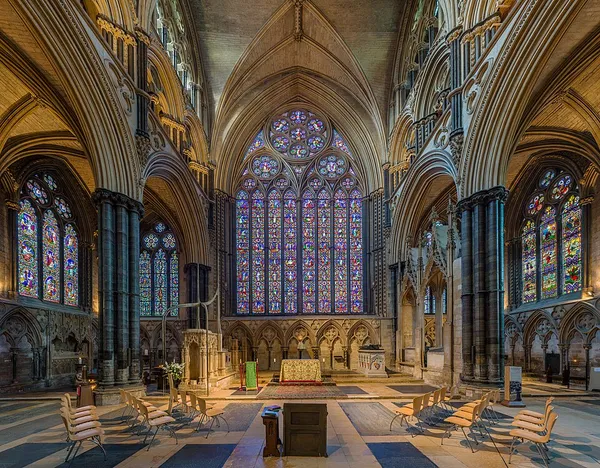
English Gothic is an architectural style that flourished from the late 12th until the mid-17th century. The majority of surviving Gothic buildings are cathedrals and churches. Gothic architecture's defining features are pointed arches, rib vaults, buttresses, and extensive use of stained glass. Combined, these features allowed the creation of buildings of unprecedented height and grandeur, filled with light from large stained glass windows. Important examples include Westminster Abbey, Canterbury Cathedral and Salisbury Cathedral. In some conservative contexts, such as Oxbridge colleges, the Gothic style endured in England into the 17th century, much longer than in most of Continental Europe, in the so-called "Gothic Survival". The Gothic style was introduced from France, where the various elements had first been used together within a single building at the choir of the Abbey of Saint-Denis north of Paris, completed in 1144. Other features were imported from the Ile-de-France, where the first French Gothic cathedral, Sens Cathedral, had been built (1135–64). The new French style was first used in England at Canterbury Cathedral (1175–85), where the French mason William of Sens rebuilt the choir after a fire in 1174. However, many features of Gothic architecture also evolved naturally from Romanesque architecture (often known in England as Norman architecture). For instance, the earliest large rib vault was over the Norman Durham Cathedral. The first cathedral in England to be both planned and built entirely in the Gothic style was Wells Cathedral, begun in 1175. Besides cathedrals, monasteries, and parish churches, the style was used for many secular buildings, including university buildings, castles, palaces, great houses, almshouses and guildhalls.
Also on this shelf
Cardboard Cathedral.
Basilica and Convent of Santo Domingo, Lima.
See also
Uncatalogued shelfText from Wikipedia; plate via Wikimedia Commons. Text CC BY-SA 4.0; plate freely licensed (see Commons). Source record. Images and catalogue data are reproduced from open-access collections.